
Last updated September 22, 2026
Level 1 sweep and inspection to the NFPA 211 annual standard - flue, crown, cap, and flashing checked and photographed
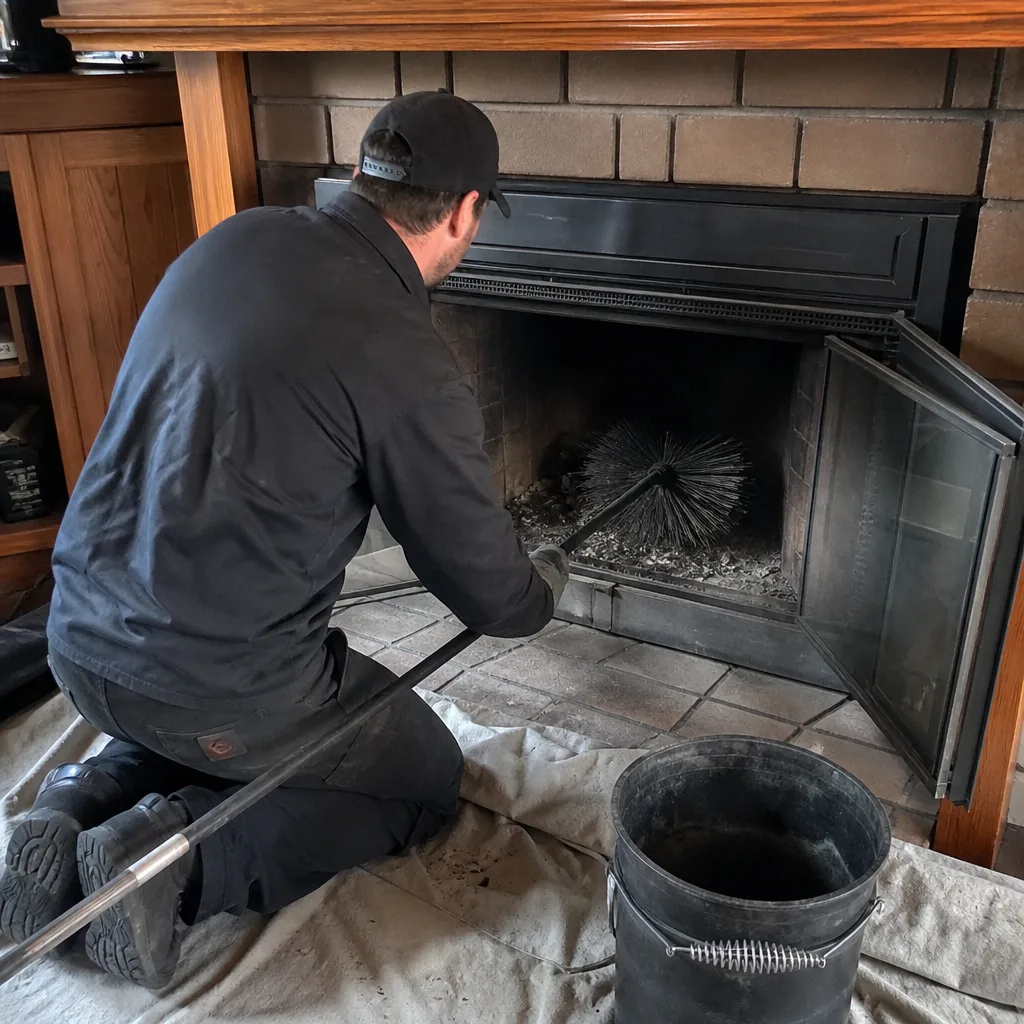
Chimney sweep logs do not sweep chimneys. They loosen some creosote - which then falls where a brush and vacuum still have to collect it.
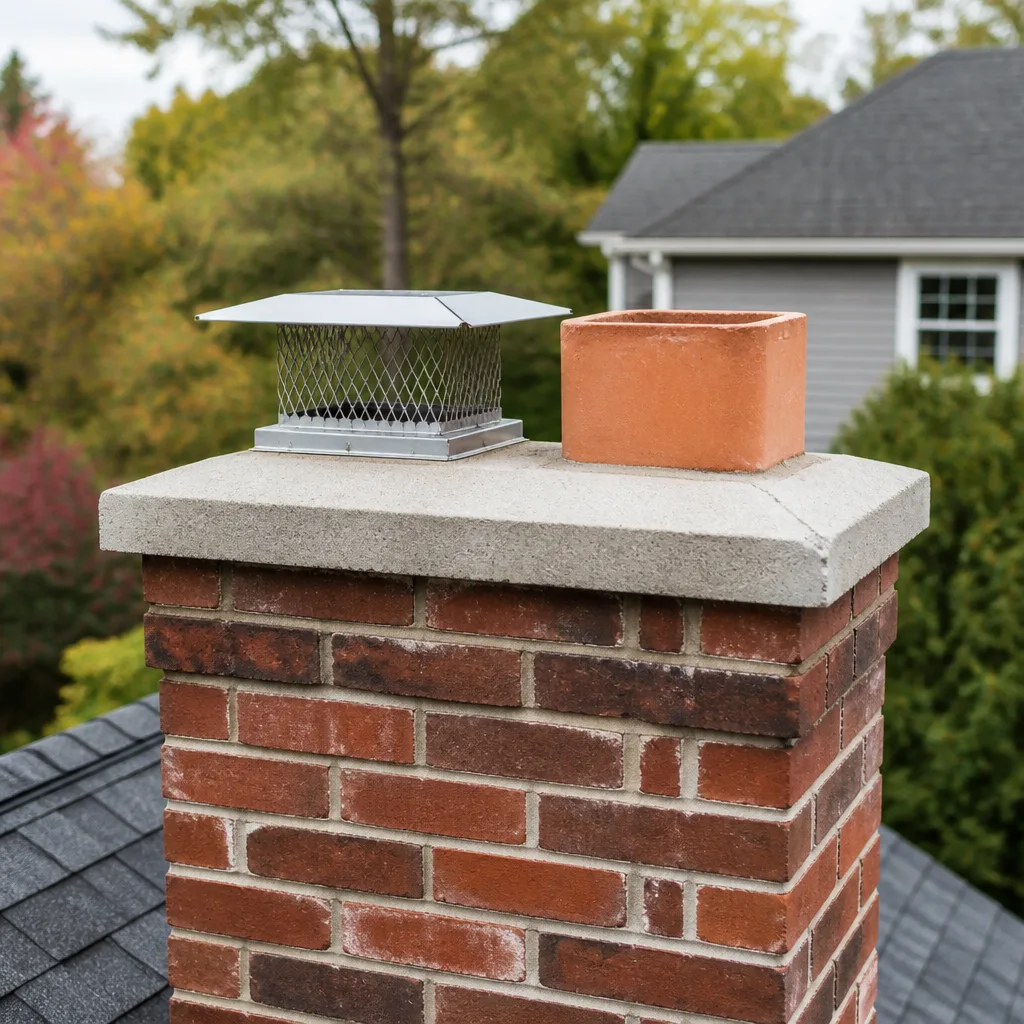
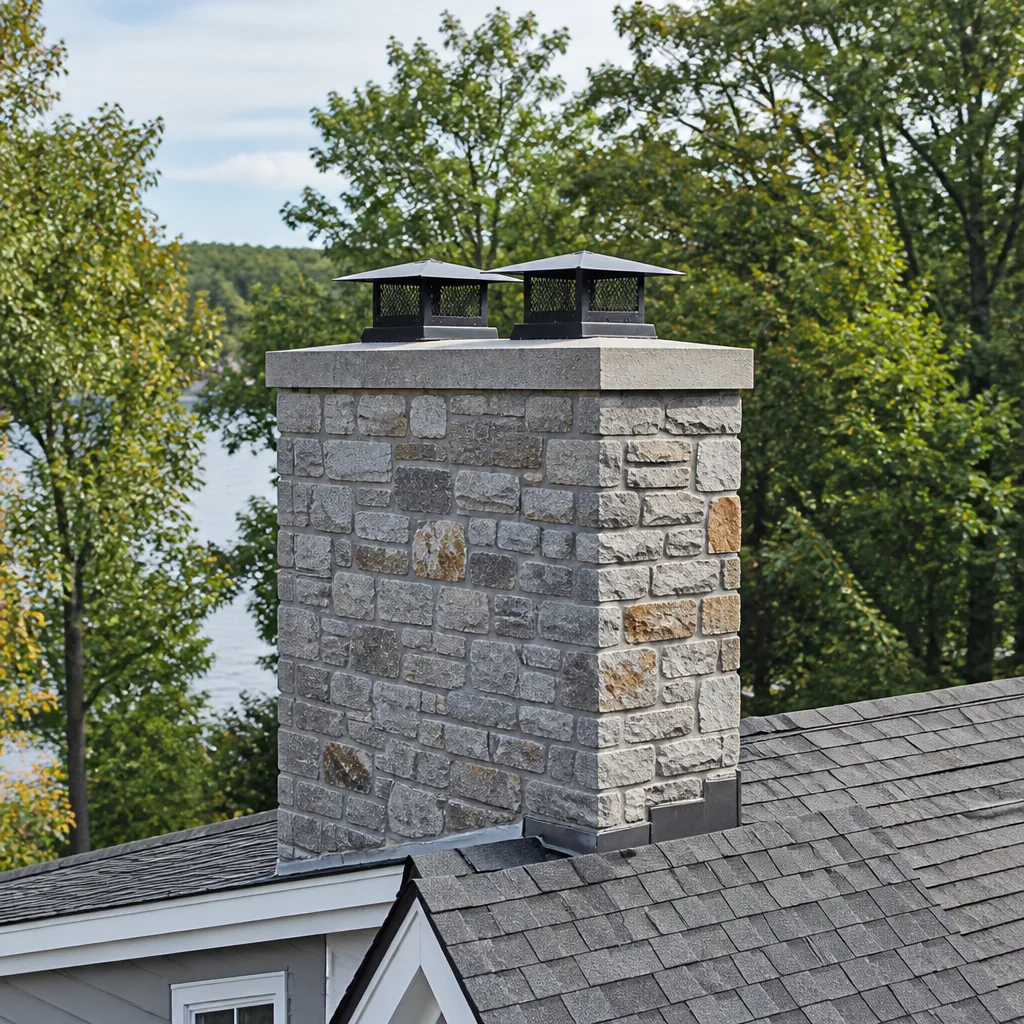
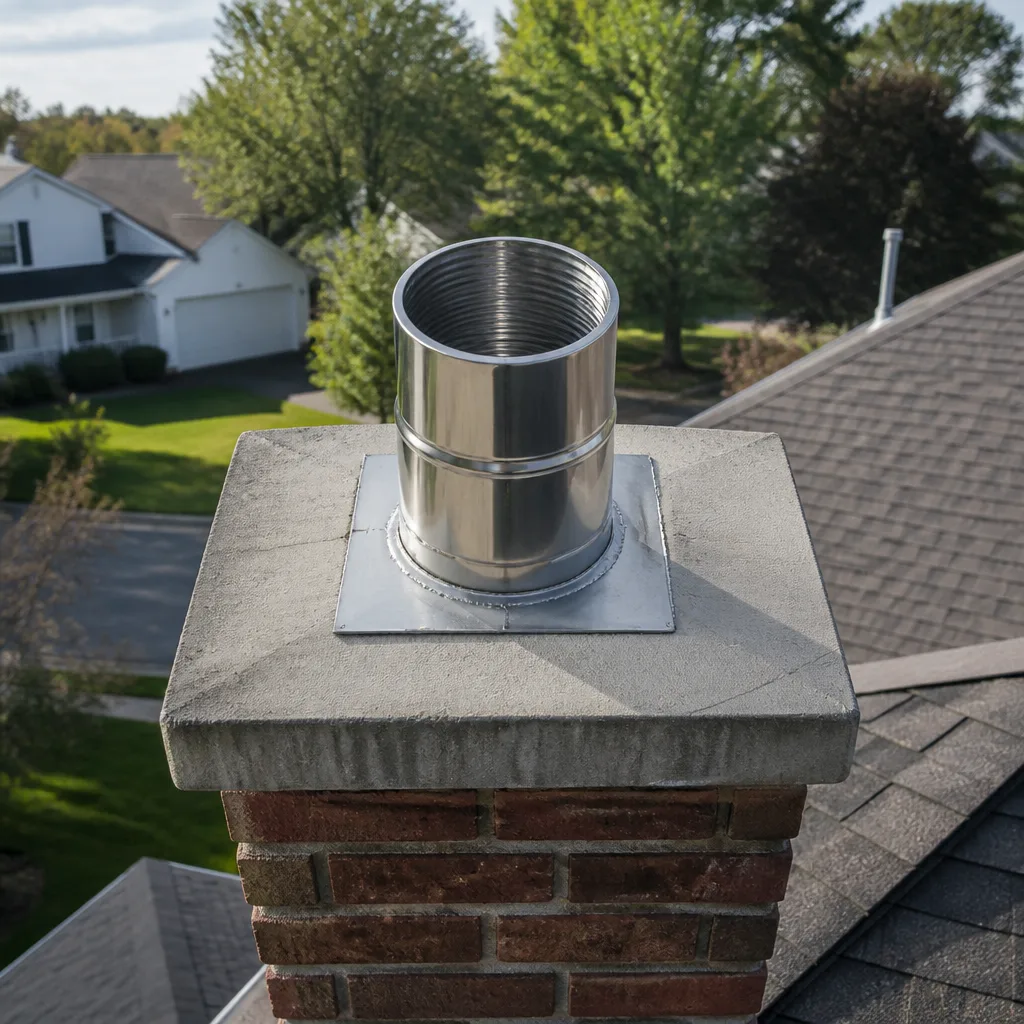
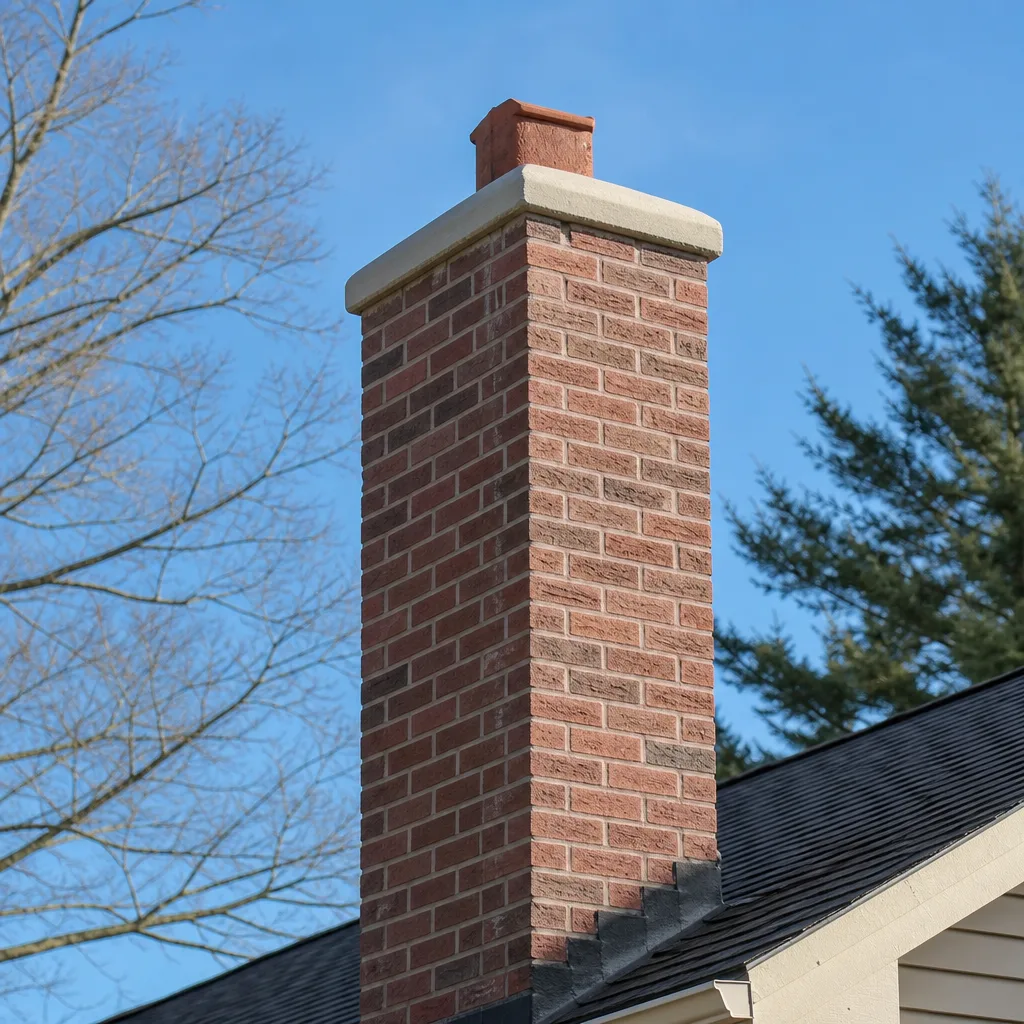
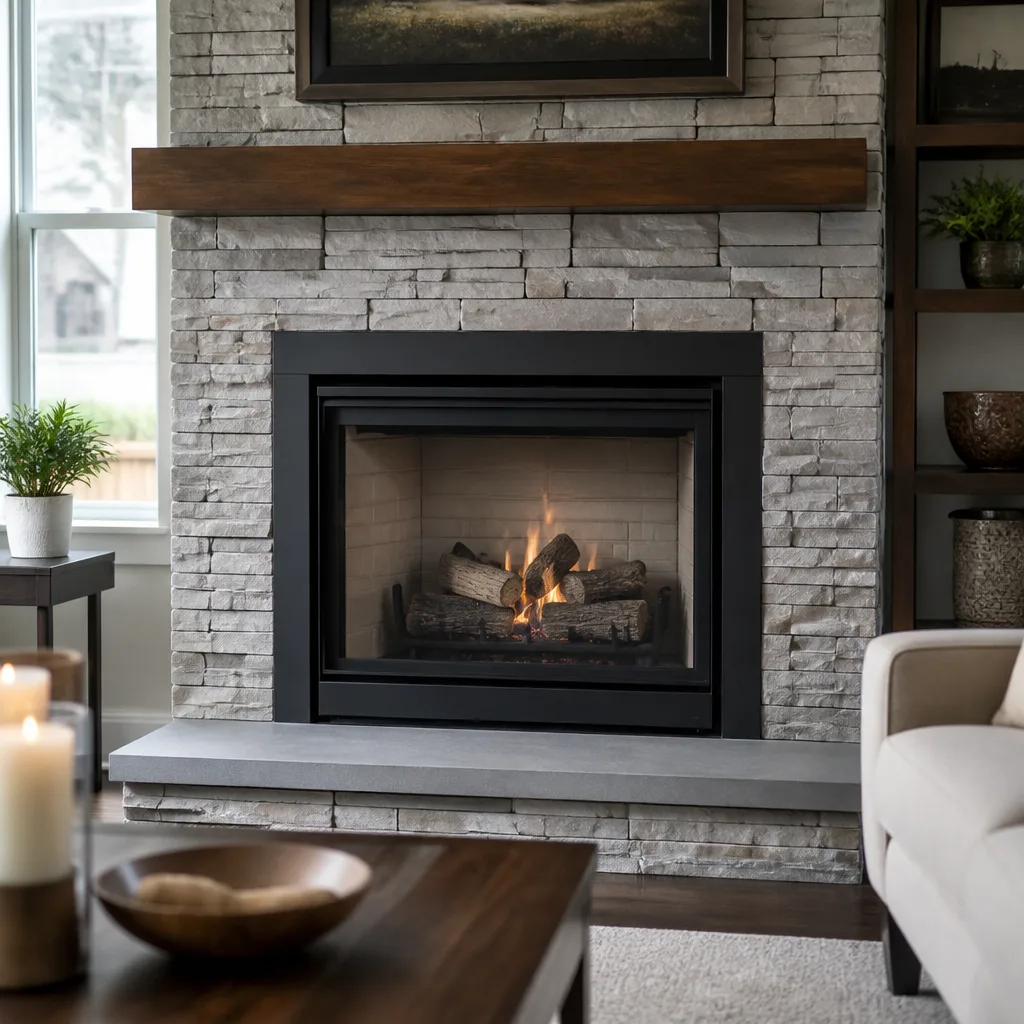
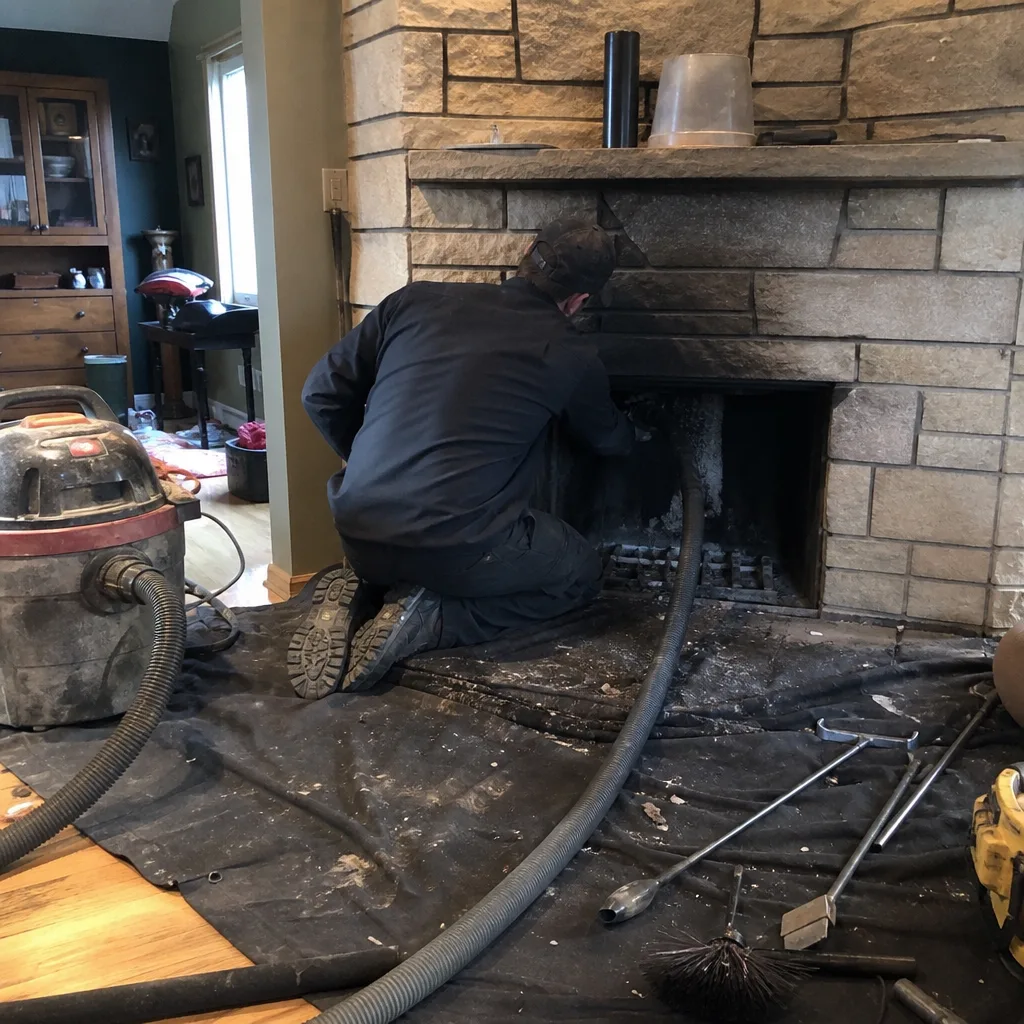 Before
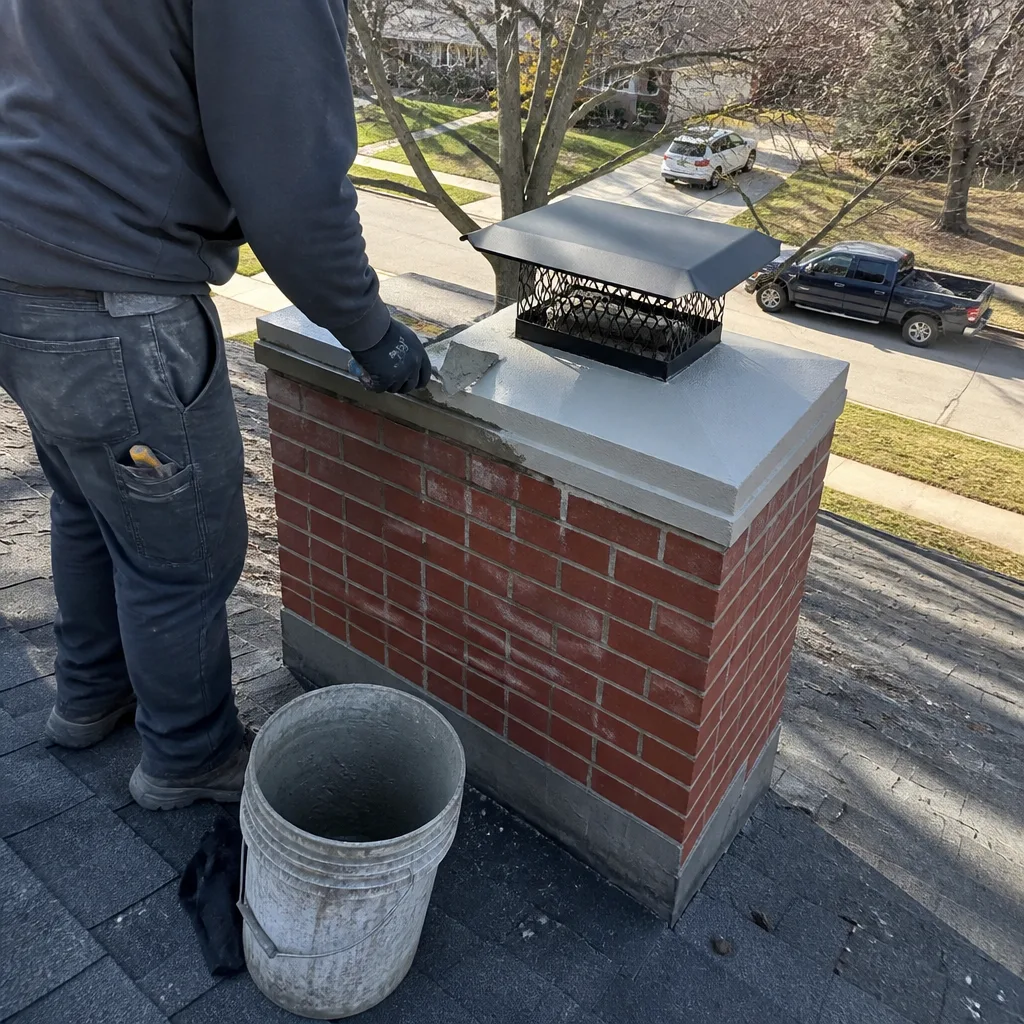 After
After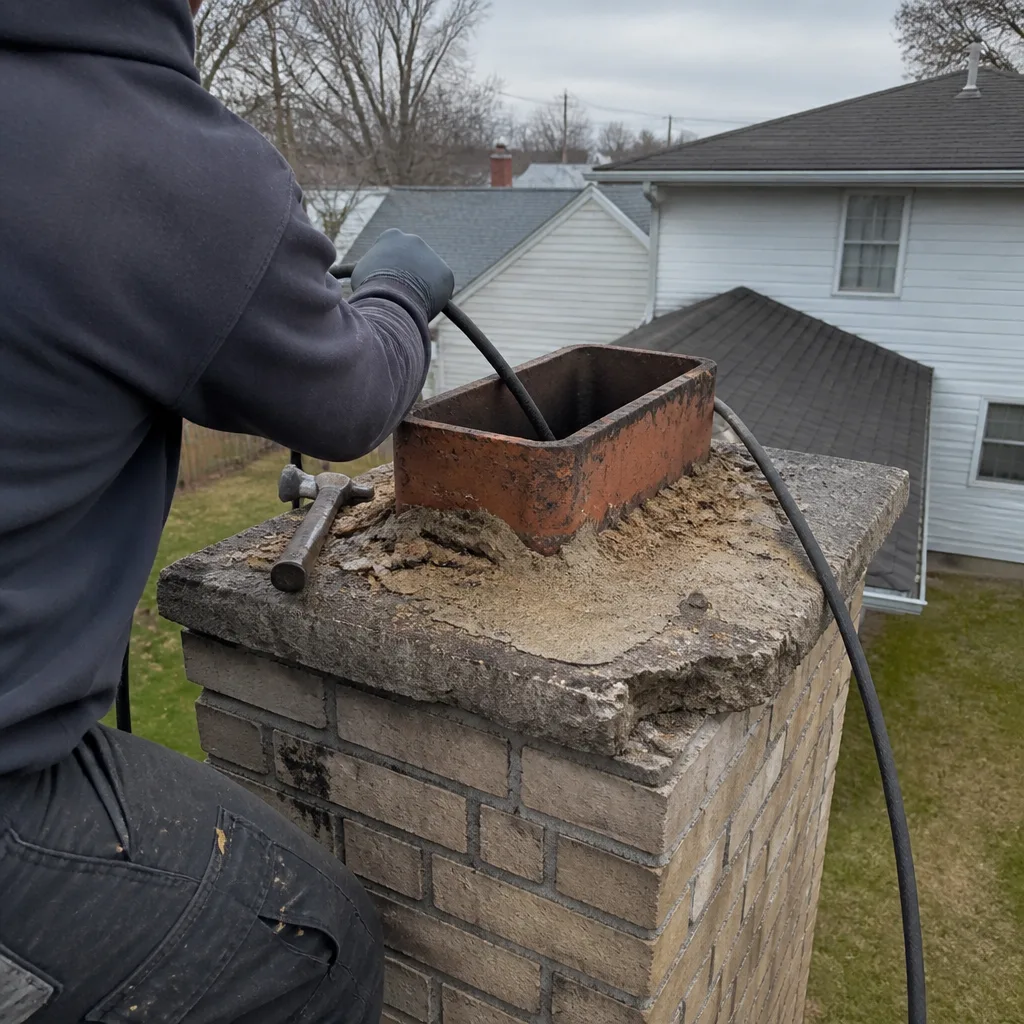 Before
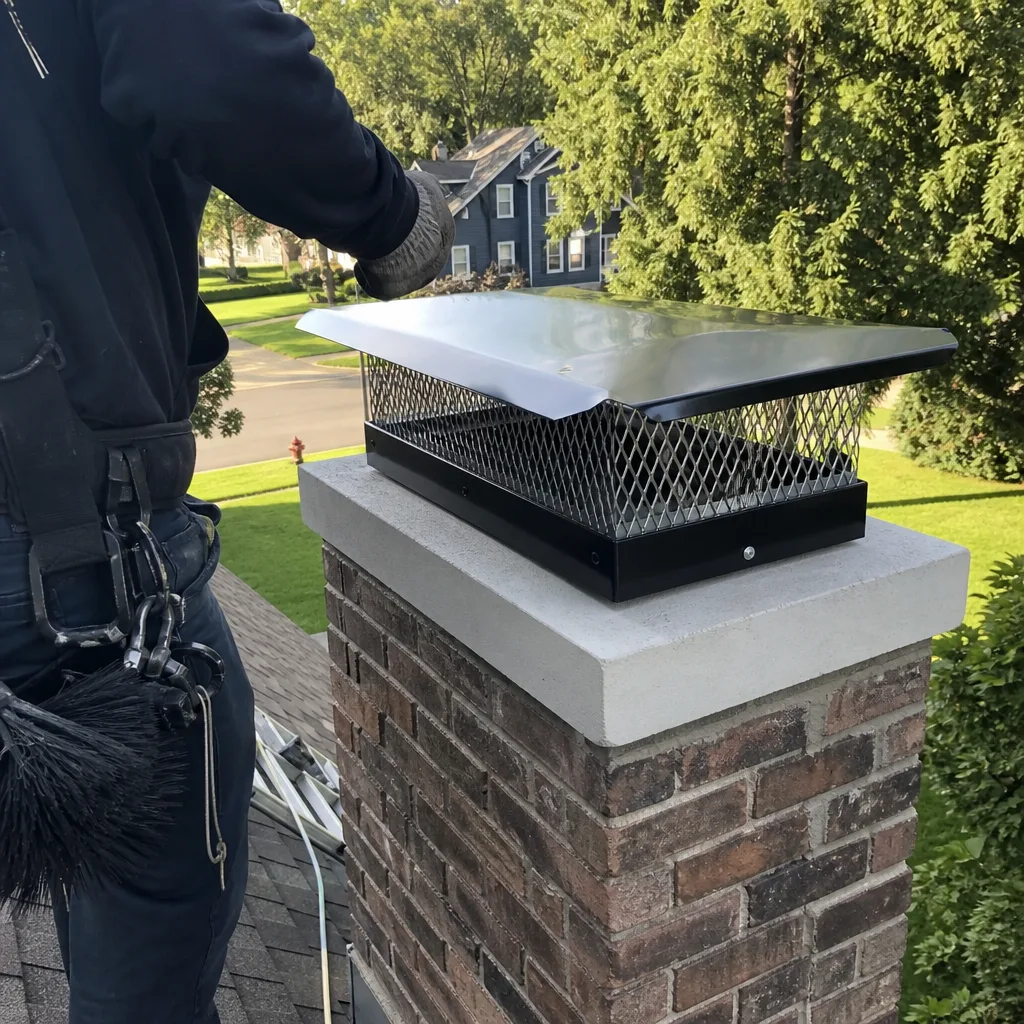 After
After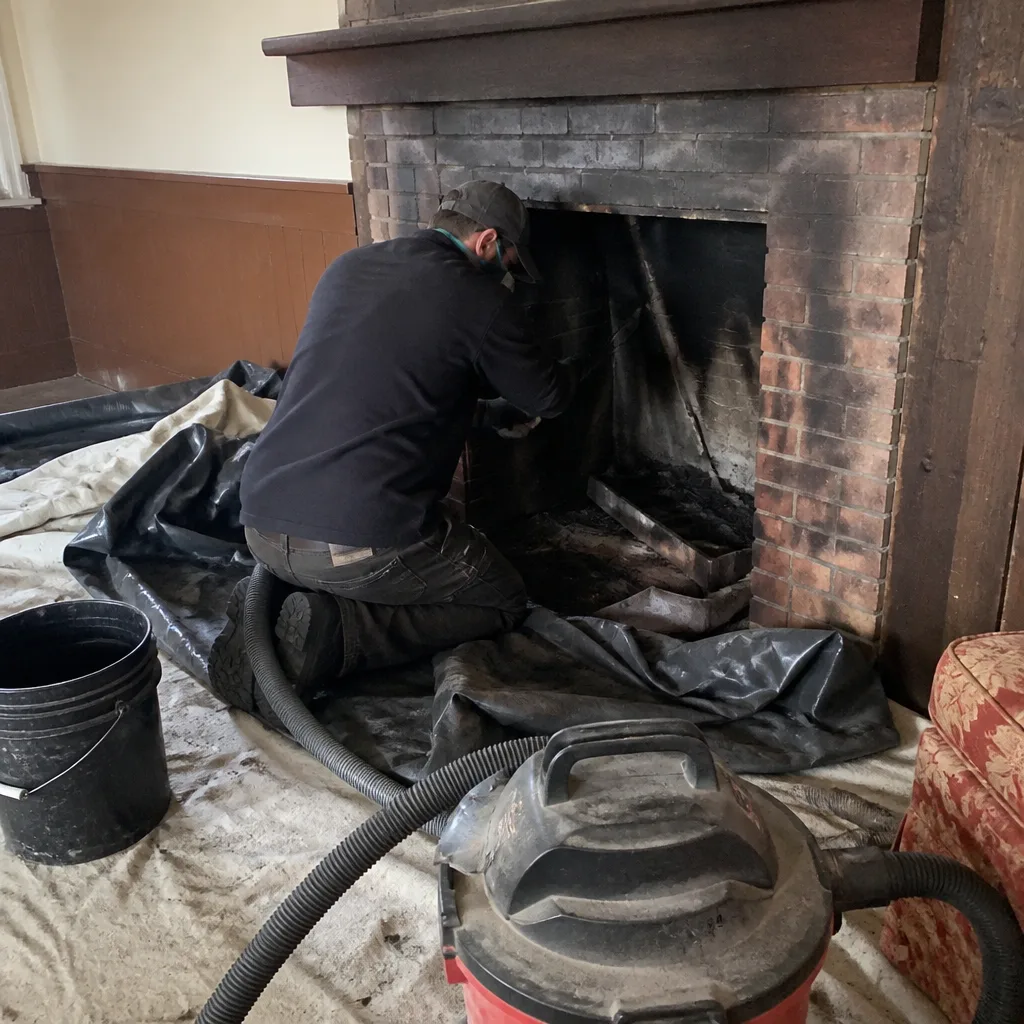 Before
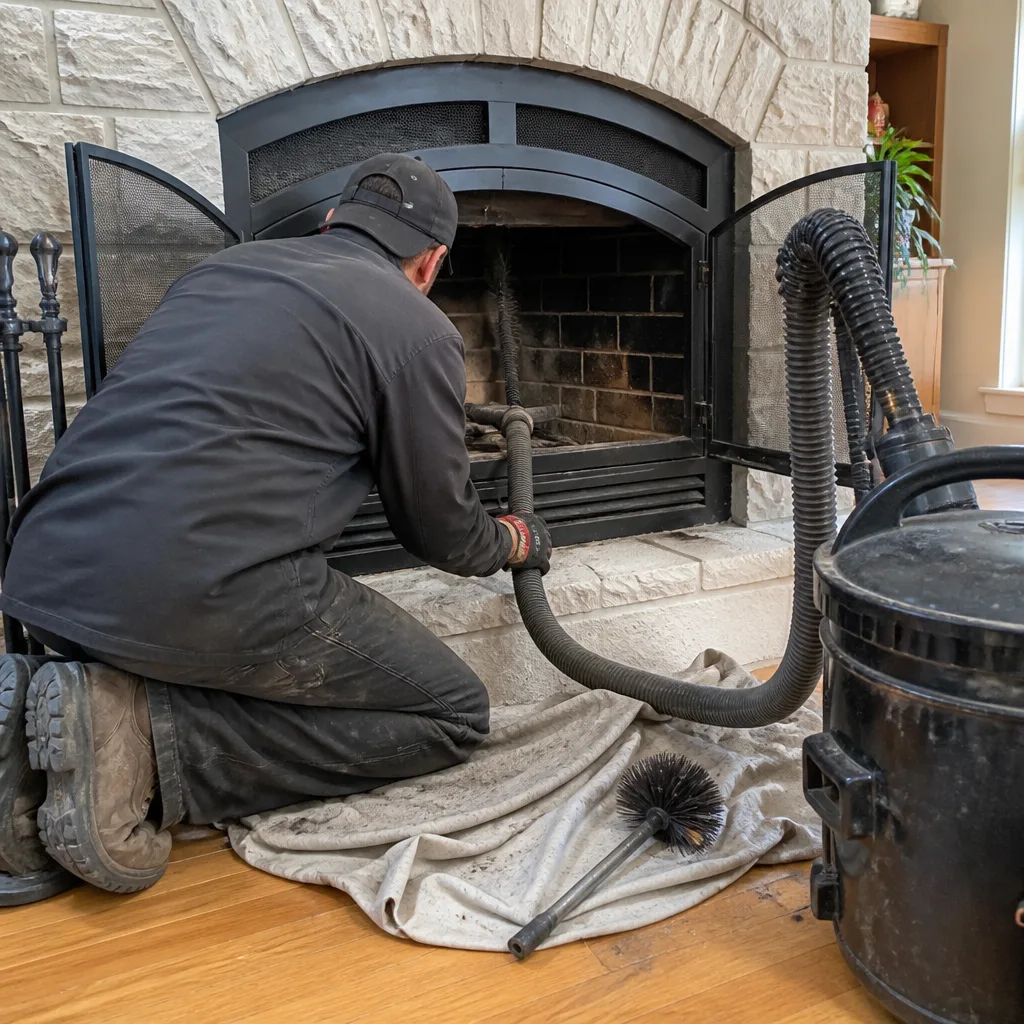 After
AfterChimney Cleaning Permits, Codes & Inspections in IL: What You Need to Know
A chimney relining job completed without a permit in Illinois violates no law the homeowner will hear about - until a home inspector flags it in a buyer’s disclosure review. Then it becomes the seller’s emergency, resolved on the buyer’s timeline and budget. In Joliet and across Will County, we’ve seen this scenario surface at least a dozen times in the past three years alone, often with $3,000-$8,000 in unexpected costs. This guide maps exactly where the permit line sits: which chimney work requires permits, which codes govern it, how Joliet’s inspection office processes applications, and why a documented Level 2 inspection report is the single best defense against surprise liability.
Quick Answer
Chimney cleaning and sweeping alone rarely require permits in Illinois (our complete guide to chimney cleaning in Joliet covers what routine maintenance entails), but repairs discovered during cleaning - relining, firebox rebuilds, structural crown work, and damper replacement - typically do under the Illinois Residential Code Chapter 10 and local amendments. In Joliet, permitted chimney work requires submission of a Level 2 inspection report, manufacturer specifications for any liner or component, and a final inspection before the system can be placed back in service. Homeowners should request copies of all permit approvals and inspection sign-offs, as these documents transfer with the property and protect against future sale or insurance disputes.
Table of Contents
- Which Codes Govern Chimney Work in Illinois?
- Where Is the Permit Threshold? Cleaning vs. Repair
- How Joliet’s Municipal Inspection Office Handles Chimney Permits
- Why a Level 2 Inspection Report Is the Baseline Document
- How Will County Amendments Differ from State Baseline
- When Prior Unpermitted Work Surfaces During a Home Sale
- Common Mistakes to Avoid
- When to Call a Professional
- Frequently Asked Questions
- The Bottom Line
 Before
 After
AfterWhich Codes Govern Chimney Work in Illinois?
Three overlapping code systems regulate chimney work in Illinois, and understanding their hierarchy matters when you’re deciding whether a permit is required.
NFPA 211: The National Fire Protection Association’s Standard for Chimneys, Fireplaces, Vents, and Solid Fuel-Burning Appliances is the national baseline. It defines inspection levels (Level 1, 2, and 3), clearance requirements, and construction standards. In Illinois, NFPA 211 is adopted by reference into state law, meaning its provisions are legally enforceable. The standard requires a Level 2 inspection - camera scan of the flue interior, accessible exterior examination, and written documentation - upon sale or transfer of a property, after chimney fire or lightning strike, and before any lining system change. This is the standard we built our name on.
Illinois Residential Code (IRC) Chapter 10: The state-adopted building code governs new construction and substantial alterations. Chapter 10 covers chimney and fireplace construction, clearances to combustibles, and venting requirements. Under IRC Chapter 10, any “repair, renovation, or modification” affecting the structural integrity, fire safety, or venting performance of a chimney system triggers permit requirements. The code specifically references liner installation, firebox reconstruction, and crown replacement as work requiring inspection.
Local Amendments: Will County and the City of Joliet maintain amendments to the state code. Joliet’s municipal code adds specific requirements for chimney permit documentation, including manufacturer certification for liner materials and proof of liability insurance for the contracting party. Will County’s amendments address rural properties with wood-burning as primary heat, requiring additional clearance verification for structures on parcels under two acres.
The practical effect: a sweep company operating in Joliet must know all three layers. We’ve encountered contractors who knew NFPA 211 but missed Joliet’s local documentation requirements, resulting in permit rejection and project delays. The reverse also happens - builders who understand municipal permitting but submit inadequate inspection reports that don’t satisfy NFPA 211’s documentation standards for the eventual home sale.
Where Is the Permit Threshold? Cleaning vs. Repair
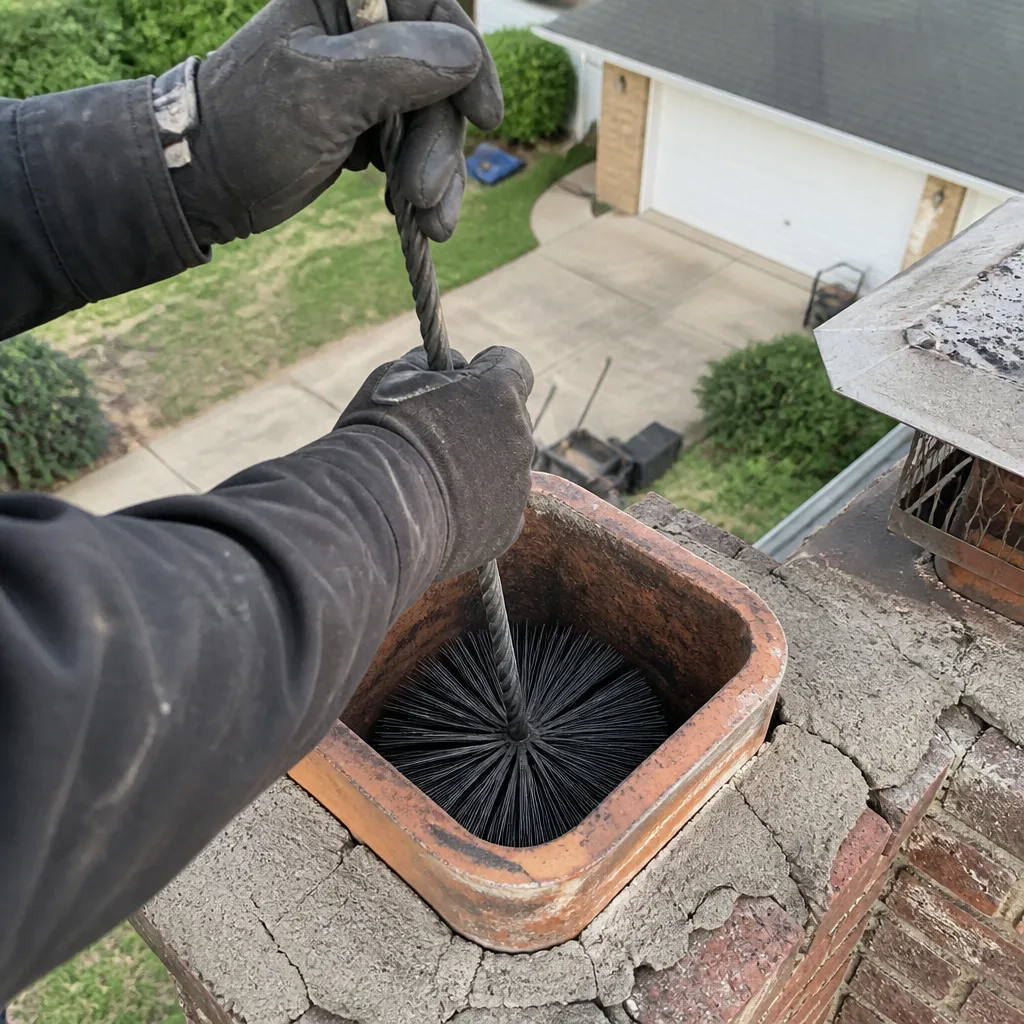
This is where most homeowners get surprised. The cleaning itself - mechanical removal of creosote and debris from the flue, smoke chamber, and firebox - falls under routine maintenance in every Illinois jurisdiction we’ve worked in. No permit required. But the condition discovered during that cleaning often crosses into regulated repair work.
Maintenance items (typically no permit):
- Chimney sweeping and creosote removal (Class I and II)
- Cap cleaning and minor debris removal
- Fireplace face cleaning and damper lubrication
- Exterior brick washing and cosmetic sealant application
- Smoke chamber parging with approved refractory material (when no structural alteration)
Repair items (typically permit required in Joliet and Will County):
- Flue liner installation or replacement - any material, including stainless steel, aluminum, or cast-in-place systems
- Firebox rebuild involving more than 25% of refractory panel replacement
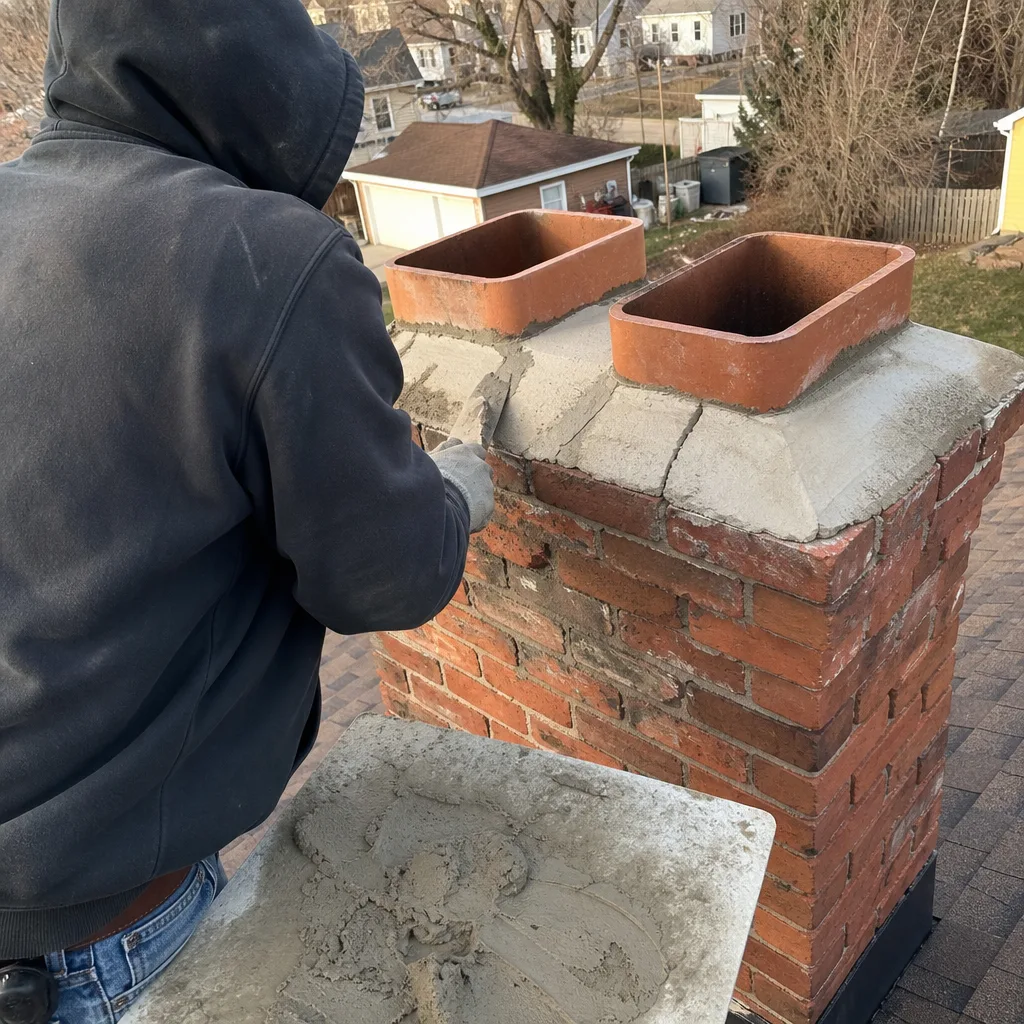
- Crown reconstruction or structural repair (not surface sealing)
- Damper replacement when throat or top-mount configuration changes
- Chimney extension or height modification
- Structural support modification, including foundation repair or cricket installation
The 25% threshold for firebox work is specific and often missed. In 2022, we inspected a home in Joliet’s Cathedral Area where a previous owner had replaced three of four refractory panels without permitting - technically a violation, though undetected until our Level 2 camera scan revealed the mismatch between panel thicknesses. The homeowner was preparing to list the property. The unpermitted work added two weeks and $1,400 to their pre-sale timeline.
Our practice, established under Haven Standard Clause 1, is to deliver a written price and written scope before any work begins - including explicit notation of whether permitting will be required. The customer sees the permit cost as a line item, not a surprise.
How Joliet’s Municipal Inspection Office Handles Chimney Permits
Joliet’s Building and Inspections Division processes chimney permits at the municipal complex on East Jefferson Street. The process follows a predictable sequence, but preparation determines speed.
Step 1: Application Submission
The contractor or homeowner submits a permit application with property address, scope of work, and contractor license information. Joliet requires the contractor’s Illinois roofing or masonry license number for structural chimney work. We provide ours on every application.
Step 2: Supporting Documentation
This is where Joliet’s requirements exceed many neighboring municipalities. The application must include:
- A current Level 2 inspection report with dated photographs of the flue interior, smoke chamber, firebox, and accessible exterior
- Manufacturer specifications and installation instructions for any liner, cap, or component being installed - we source materials from Olympia Chimney, Famco, and other manufacturers with full documentation packets
- Proof of general liability insurance naming the City of Joliet as certificate holder
- Written scope of work with material specifications
Step 3: Plan Review
Standard chimney permits undergo administrative review within 3-5 business days. Complex projects - full rebuilds, height modifications, or historical district properties - require technical review and may extend to 10 business days.
Step 4: Permit Issuance and Work Window
Once issued, the permit carries a 180-day work window with one automatic 90-day extension. The permit card must be posted on-site during all work.
Step 5: Rough and Final Inspections
Most liner installations require rough inspection (liner in place, before closure) and final inspection (complete system, operational test). The homeowner should receive a signed inspection card or digital approval record. We include this in our documented job record under Haven Standard Clause 4.
Joliet’s inspection fee schedule for chimney work runs approximately $75-$150 for standard permits, with additional fees for plan review on complex projects. We quote this explicitly in our written price - never buried in a “materials and permits” lump sum.
Why a Level 2 Inspection Report Is the Baseline Document
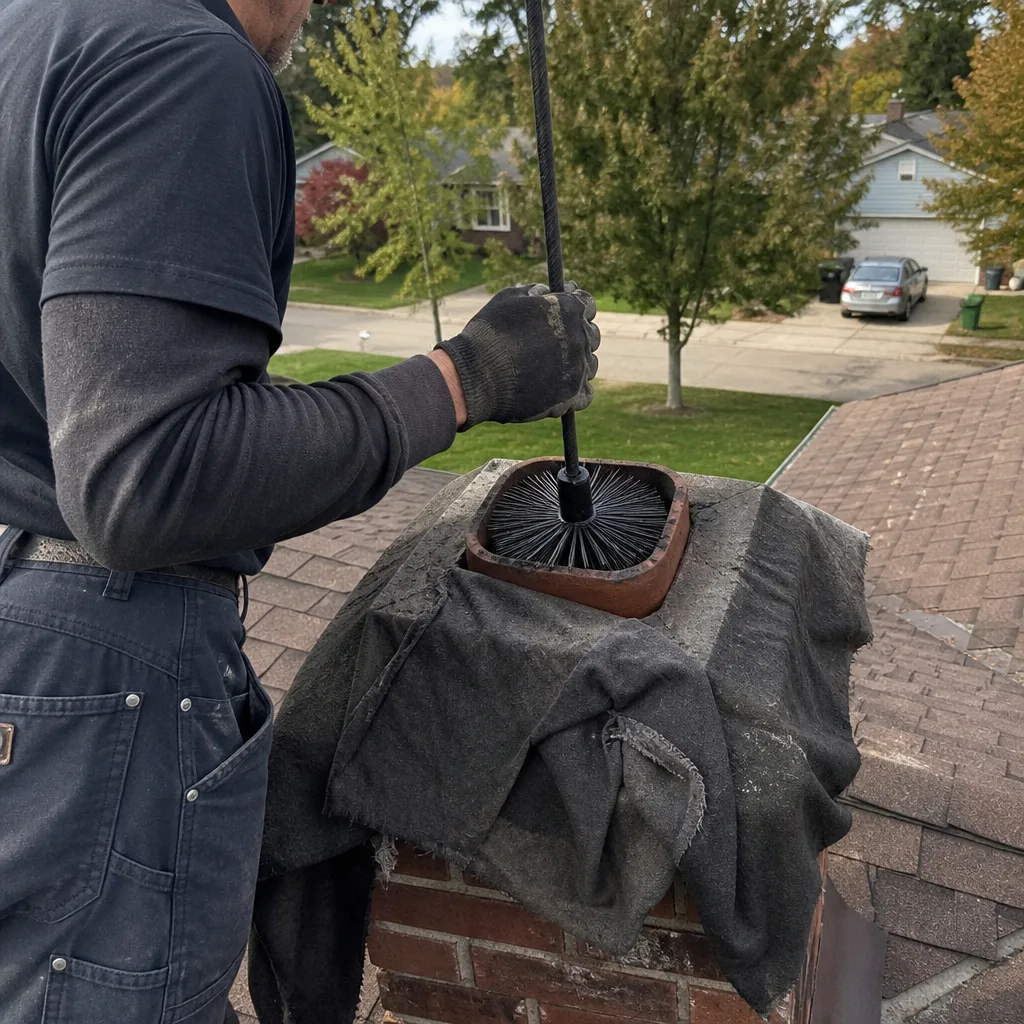
A Level 2 inspection report isn’t merely a recommendation in Illinois - it’s the functional prerequisite for any permitted chimney repair. Building inspectors in Joliet and Will County routinely reject permit applications that lack adequate documentation of existing conditions. The report establishes the “before” state that justifies the proposed work and verifies that no concealed hazards would affect the repair approach.
Under NFPA 211, a Level 2 inspection includes:
- Visual examination of readily accessible portions of the chimney exterior and interior
- Video camera scan of the flue liner full length, from firebox to crown
- Examination of accessible portions of the appliance and connection
- Written report with findings, recommendations, and documented photo or video record
What distinguishes a report that satisfies Joliet’s building inspector from one that doesn’t? Specificity. A report stating “flue shows deterioration” will be returned for clarification. A report stating “6-inch diameter clay flue liner, 18 feet nominal length, exhibits longitudinal cracking at 9-11 feet above firebox, with 3/8-inch gap at joint 4, requiring stainless steel liner replacement per manufacturer’s sizing table” moves through review.
We’ve maintained this documentation standard since 2009 - every one of our 38,000+ jobs includes a photo record, written scope, and written warranty. Haven Standard Clause 4 requires it. When a Joliet homeowner later needs to prove work was properly permitted and inspected, our archive produces the evidence.
The report also serves as liability protection. In 2021, a homeowner in Joliet’s Lynwood neighborhood faced an insurance dispute after a chimney fire - one of the chimney cleaning warning signs Joliet homeowners should watch for. Their prior sweep company had performed only a Level 1 visual inspection - no camera, no documentation. The insurer disputed whether pre-existing liner damage contributed. Our Level 2 report from a 2019 inspection, with dated video showing liner condition at that time, would have resolved the question instantly. The homeowner had no such record.
How Will County Amendments Differ from State Baseline
Will County’s amendments to the Illinois Residential Code create specific requirements that differ from both state baseline and Cook County practice. For Joliet homeowners, these distinctions matter because Will County’s unincorporated areas and certain municipalities follow county rather than city inspection.
Primary heat source provisions: Will County requires additional documentation when a wood-burning appliance serves as primary or sole heat source for a dwelling. The permit application must include a heat-loss calculation or equivalent documentation proving the appliance’s rated output meets the structure’s heating demand. This affects rural properties near Joliet’s periphery - areas near Elwood, Manhattan, and unincorporated precincts where propane or wood heat is common.
Clearance verification: County inspectors conduct physical measurement of clearances to combustibles during final inspection, not merely visual confirmation. This means furniture, stored materials, or temporary coverings must be removed. We’ve arrived at final inspections to find homeowners surprised by this requirement, causing rescheduling.
Manufacturer certification requirement: Will County explicitly requires original manufacturer certification for liner materials, not merely product labels or cut sheets. We maintain current certification packets from our suppliers - including Gelco and Copperfield products - specifically for this requirement.
Wood moisture documentation: For new installations, Will County requires documentation of proper firewood seasoning (below 20% moisture content) as a condition of final approval. This is enforced through a signed homeowner acknowledgment, not laboratory testing, but the signature creates a record that affects future insurance claims if improper fuel use contributes to a chimney fire.
Joliet’s municipal code does not include the wood moisture requirement, creating a clear distinction between city and county permits for identical work. We note this explicitly in our written scope when quoting jobs near jurisdictional boundaries.
When Prior Unpermitted Work Surfaces During a Home Sale
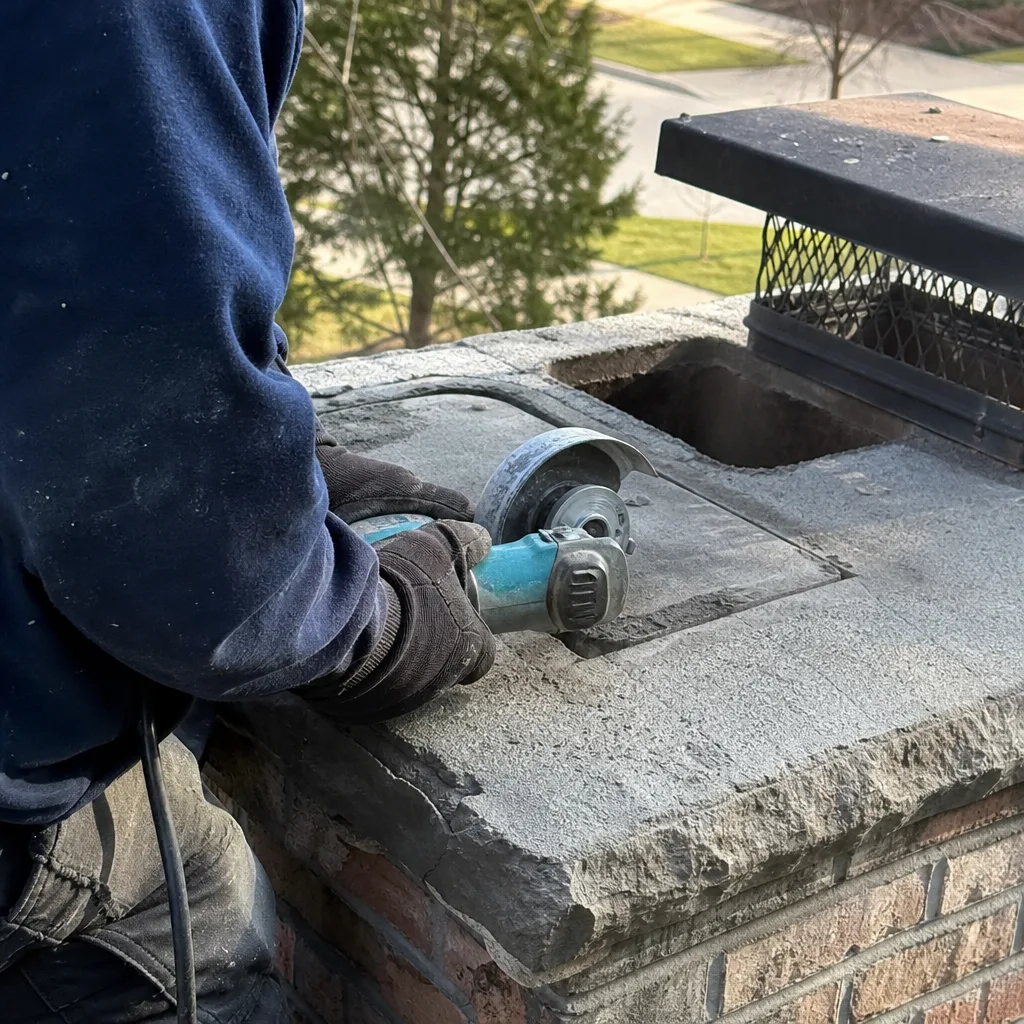
This is the scenario that converts a permit oversight into a financial emergency. Illinois residential real estate transactions include a disclosure form (Residential Real Property Disclosure Report) that asks about “additions, structural modifications, or other alterations” made without required permits. Chimney relining, firebox rebuilds, and crown reconstruction qualify.
The disclosure requirement creates a documented liability gap with three potential consequences:
- Buyer negotiation leverage: The buyer’s inspector identifies unpermitted work. The buyer demands either proof of proper permitting or a credit for estimated remediation - often inflated beyond actual cost.
- Insurance coverage disputes: A post-sale chimney fire or CO incident triggers insurer investigation. Unpermitted liner installation may be cited as a policy violation, particularly if the insurer can demonstrate the work would not have passed inspection.
- Municipal enforcement: Though rare, Joliet’s code enforcement can require removal and replacement of unpermitted work at the current owner’s expense, particularly if the work creates immediate safety hazards.
The actual legal exposure depends on timing and documentation. Illinois law provides a five-year statute of limitations for building code violations from the date of discovery, not the date of work. For homeowners who purchased a property with existing unpermitted work, the question becomes: when did you know or should you have known?
A documented Level 2 inspection record limits this exposure in two ways. First, it establishes the condition of the system at a specific date, preventing retrospective claims that damage existed earlier. Second, if our inspection identifies unpermitted work, we flag it explicitly in our report with recommended remediation - creating a defensible record that the homeowner acted on professional advice.
In 2023, we inspected a home in Joliet’s Wesmere neighborhood where the seller had installed a stainless liner five years prior through an unlicensed contractor. The buyer’s inspector flagged the absence of permit documentation. Our Level 2 scan revealed the liner was properly sized and installed - the work was sound, merely unpermitted. We facilitated a retroactive permit application with Joliet’s inspection office, including our current inspection as supporting documentation. The permit cost $125, the inspection passed, and the sale closed on schedule. Without that documentation path, the seller faced a $4,000 credit demand or a delayed closing.
Common Mistakes to Avoid
- Assuming cleaning and repair are the same permit category. Many homeowners receive a sweep quote, approve additional work discovered during the sweep, and never realize the repair portion required separate permitting. Always ask explicitly: “Does this scope require a permit, and who obtains it?”
- Accepting verbal assurance that a permit “isn’t needed for this.” In Joliet, permit requirements are categorical, not discretionary. A contractor who suggests skipping permitting to save time or money is exposing the homeowner to liability, not doing a favor.
- Failing to request the final inspection sign-off. The permit card posted during work is not proof of compliant completion. The signed inspection approval - physical or digital - is the document that transfers with the property. We deliver this with every permitted job.
- Using inspection reports from outdated or non-camera inspections. Joliet’s inspection office has returned permit applications with Level 1 reports (visual only, no flue interior documentation). The report must match the work proposed.
- Neglecting to verify manufacturer certification for liner materials. Will County’s explicit requirement for original manufacturer certification has caused permit rejections when contractors submitted only product cut sheets. We maintain current certification from all suppliers.
- Assuming neighboring municipalities match Joliet’s requirements. Shorewood, Plainfield, and Romeoville each maintain distinct amendment schedules. A permit process that worked in Naperville may fail in Joliet. We verify requirements for each job address.
- Discarding documentation after work completion. Permit approvals, inspection sign-offs, and inspection reports should be retained for the duration of ownership plus the applicable statute of limitations. Our digital archive retains records indefinitely under Haven Standard Clause 4.
When to Call a Professional
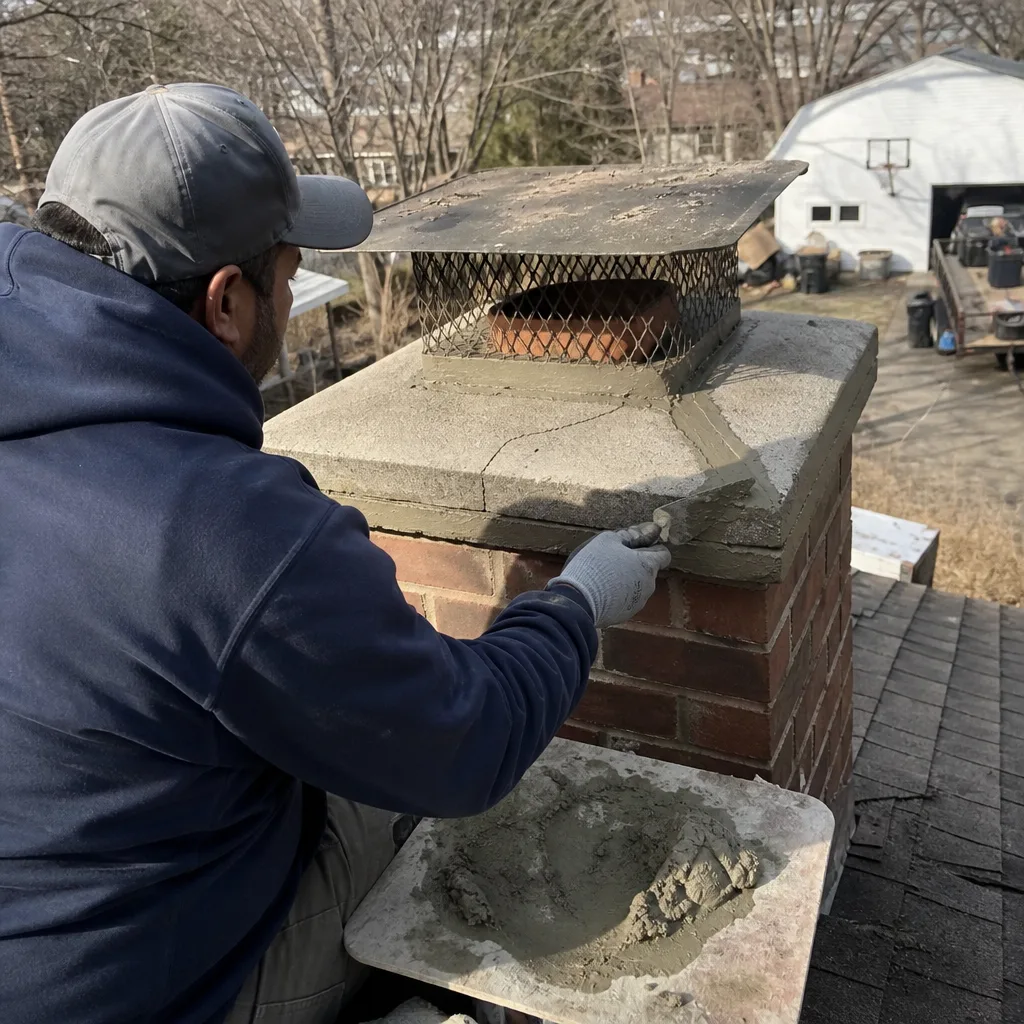
Contact a qualified chimney professional when you’re purchasing a home with an undocumented service history, preparing to sell and uncertain about prior work, or when any sweep or inspection recommends repairs involving liner replacement, firebox reconstruction, or structural crown work. Browse more guides & resources to understand your obligations before calling. The cost of proper documentation and permitting is always lower than the cost of discovering a gap during a transaction.
Level Two Chimney Joliet offers free estimates in Joliet and surrounding Will County communities. Every estimate includes a written scope, explicit notation of permit requirements, and a written price before any work begins - Haven Standard Clause 1, no exceptions. We also provide free second opinions on any competitor’s written estimate. Call (815) 620-5234 to schedule.
Frequently Asked Questions
No. Routine chimney sweeping, creosote removal, and basic maintenance do not require permits in Joliet or anywhere in Will County. Permits become required when the work involves structural repair, liner installation, firebox rebuild, or other modifications affecting the chimney’s safety performance. If your sweep discovers conditions requiring repair, ask explicitly whether permitting applies to the proposed scope.
Standard chimney repair permits in Joliet typically cost $75-$150, with additional plan review fees for complex projects such as full rebuilds or height modifications. The permit fee is separate from inspection and contractor costs. We include permit fees as a line item in every written estimate - never hidden in a lump sum. Call (815) 620-5234 for an exact quote on your specific scope; estimates are free.
NFPA 211 recommends annual inspection for all chimneys, with cleaning frequency determined by use and fuel type. In Joliet’s climate - with heating seasons running October through April and frequent freeze-thaw cycles that accelerate masonry deterioration - we typically recommend sweep and inspection annually for wood-burning systems and every two years for gas appliances with proper venting. Heavy use (more than three cord wood per season) may require mid-season cleaning.
Skipped maintenance allows creosote accumulation, which increases chimney fire risk - Class III glazed creosote ignites at approximately 451°F, a temperature easily reached in normal operation. In Joliet’s older housing stock, particularly in neighborhoods like East Side and the Cathedral Area with pre-1980 masonry, deferred maintenance also permits water infiltration that destroys liners and compromises structural integrity. The documented consequence is rarely immediate failure; it’s gradual degradation that converts a $200 sweep into a $4,000+ rebuild.
Liner replacement is necessary when the existing liner is damaged, improperly sized, or absent - conditions that create fire or carbon monoxide hazards. We never recommend liner replacement without camera evidence you can review yourself. Our Level 2 inspection includes dated video of the flue interior, and Haven Standard Clause 4 requires we provide it. If the liner shows minor deterioration without breach, we’ll document the condition and recommend monitoring, not immediate replacement. Call (815) 620-5234 to schedule an inspection and see the evidence yourself.
Illinois law permits homeowners to act as their own contractors on single-family owner-occupied residences, including pulling permits. However, Joliet’s inspection office strongly prefers - and for certain work types requires - contractor licensing documentation. The practical reality is that most liner and structural work requires manufacturer-certified installation for warranty validity, which homeowners cannot typically obtain. We handle permitting as standard practice, deliver all documentation to the homeowner, and include permit status in our written job record.
The Bottom Line
Chimney cleaning in Illinois stands apart from chimney repair in a single critical dimension: permits. The sweep itself requires none, but the repairs it routinely reveals often do, and the gap between unpermitted work and documented compliance only appears when it’s expensive - during a home sale, an insurance claim, or a code enforcement response. Joliet’s specific requirements for Level 2 inspection documentation, manufacturer certification, and final inspection sign-off create a clear compliance path for homeowners who know to ask. The protection isn’t in the permit itself; it’s in the documented record that transfers with the property and proves the work was done to standard.
Written by Corrine Halstead, Owner at Level Two Chimney Joliet, serving Joliet since 2009.