
Last updated September 22, 2026
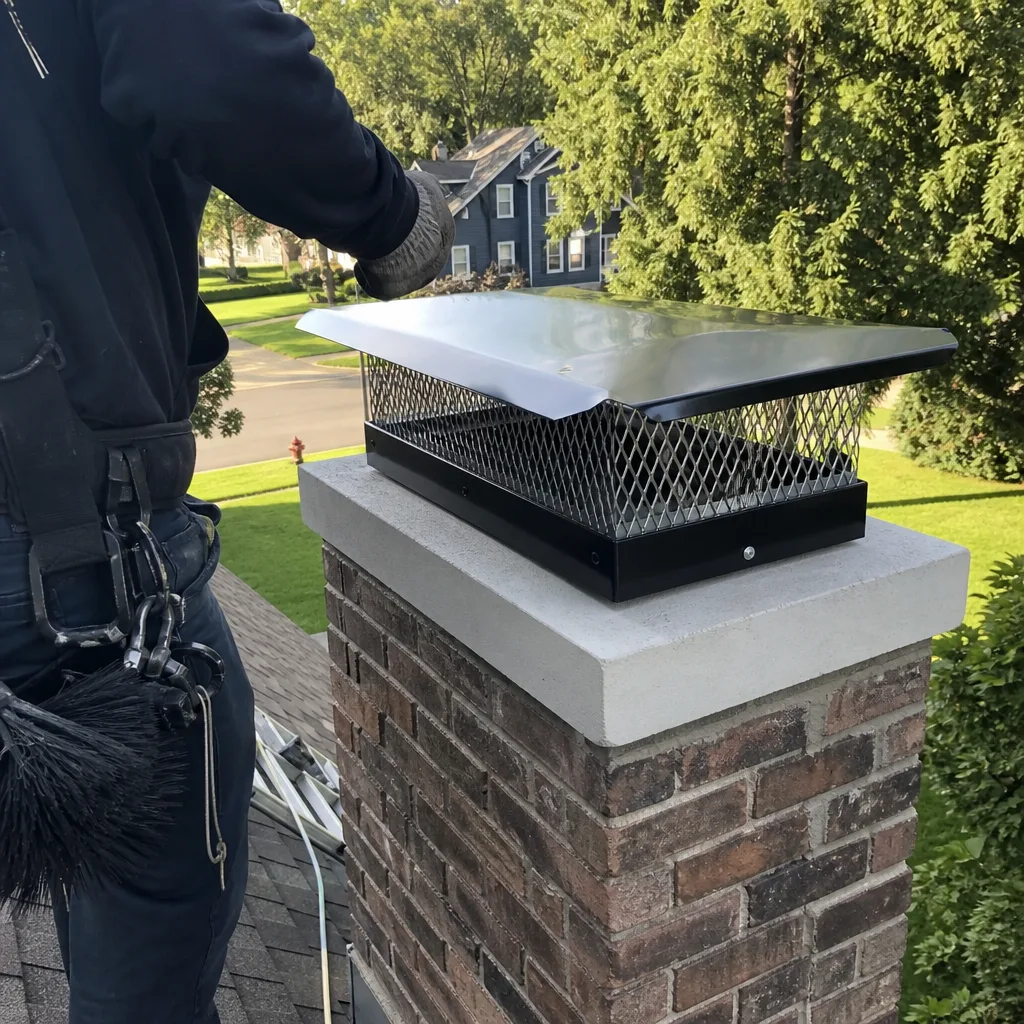
Level 1 sweep and inspection to the NFPA 211 annual standard - flue, crown, cap, and flashing checked and photographed
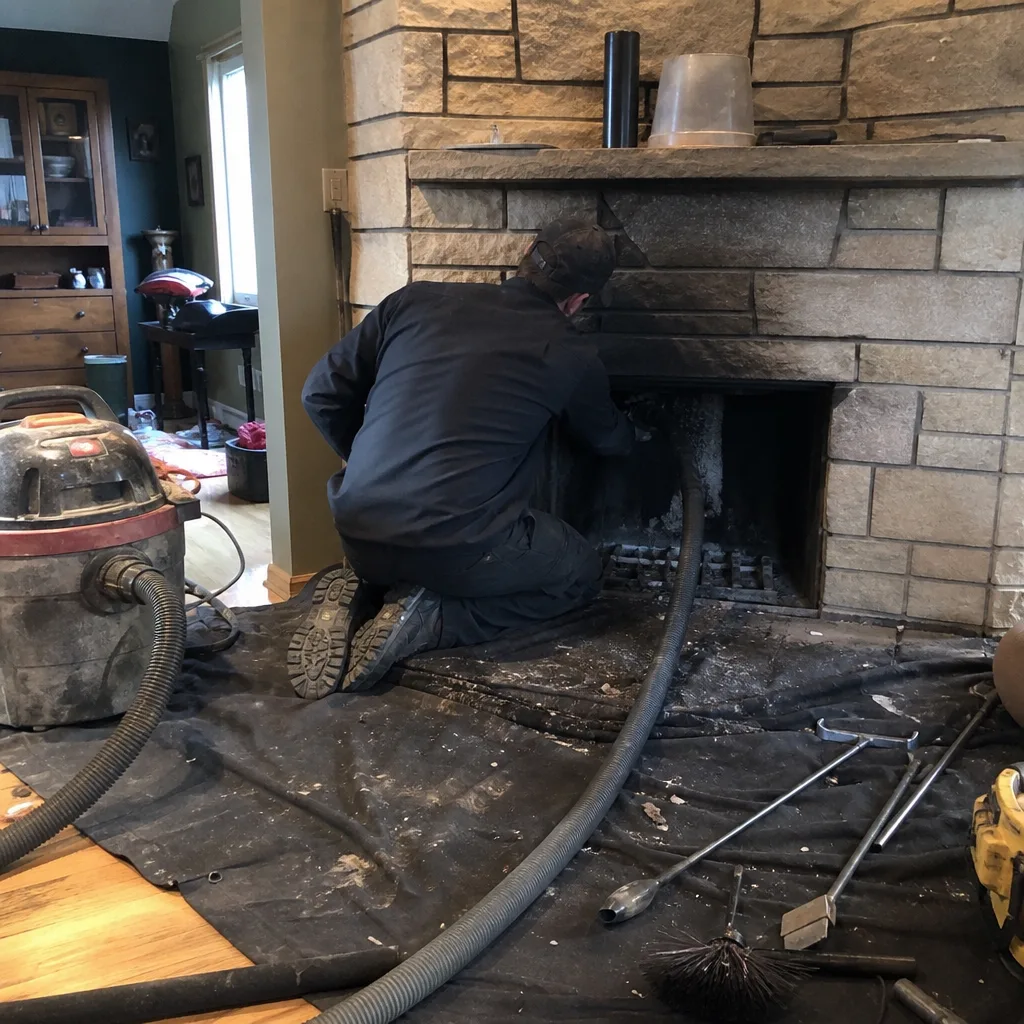
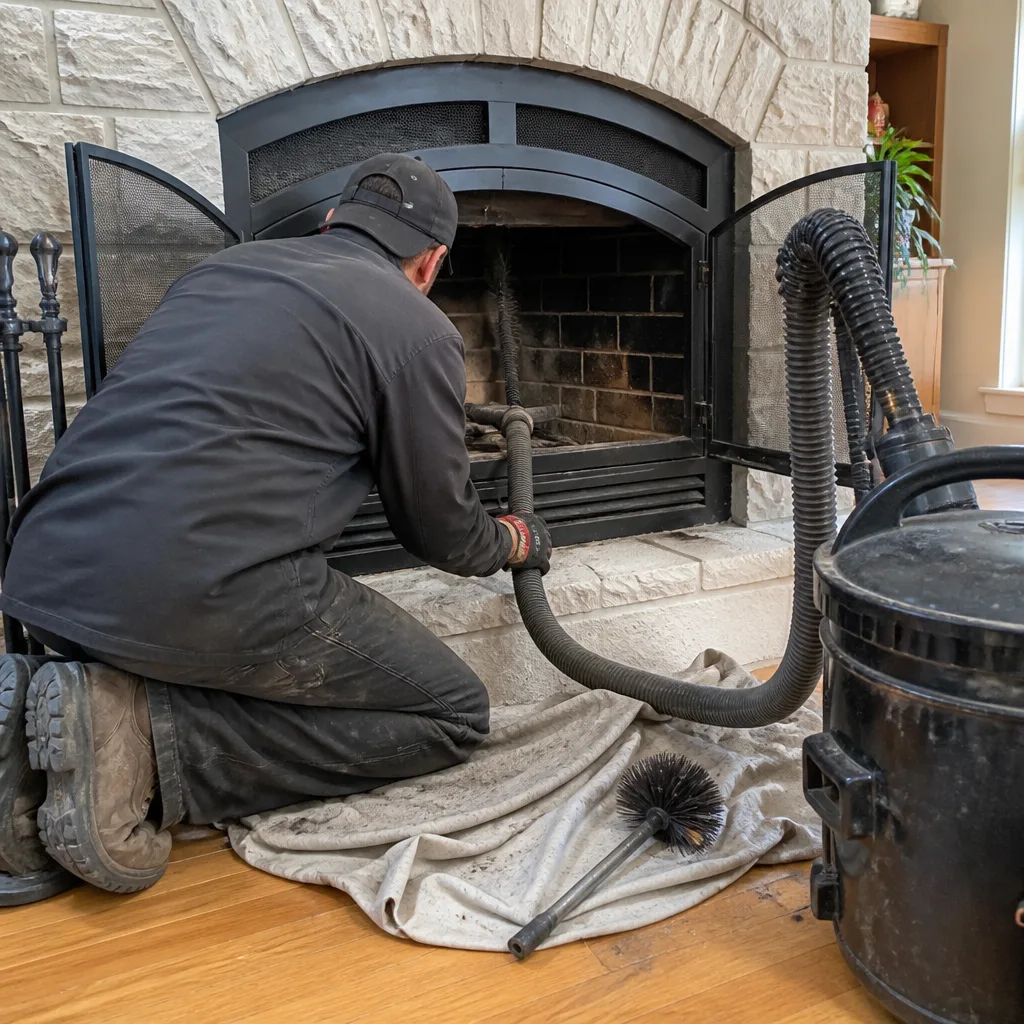
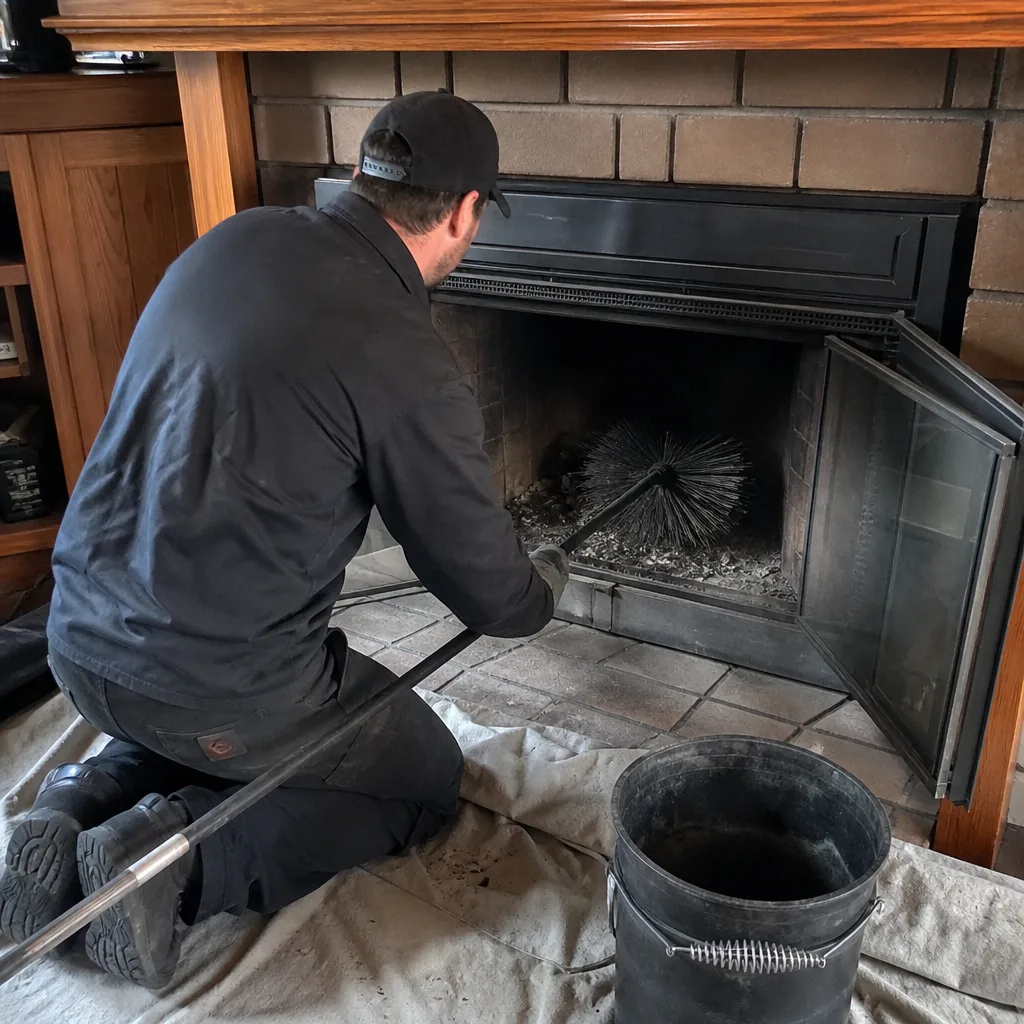
Chimney sweep logs do not sweep chimneys. They loosen some creosote - which then falls where a brush and vacuum still have to collect it.
 Before
 After
After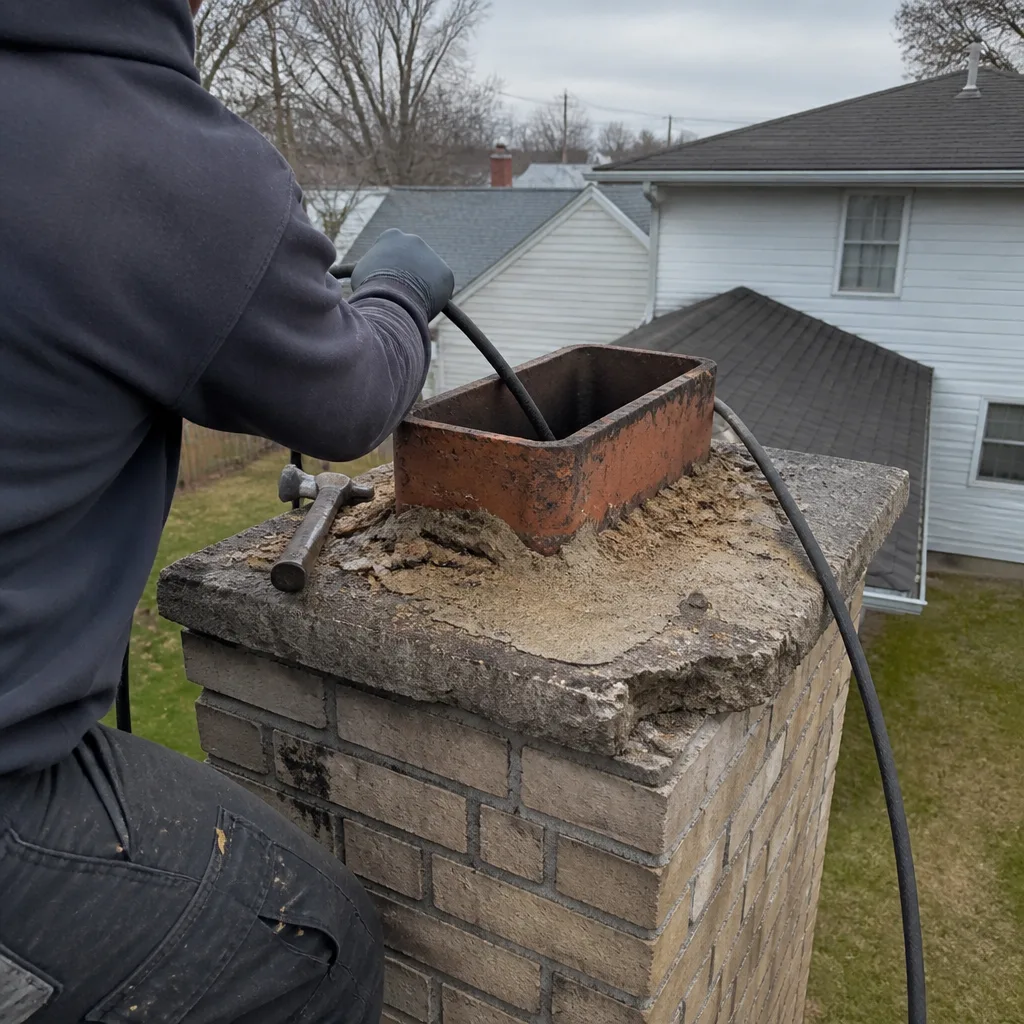 Before
 After
After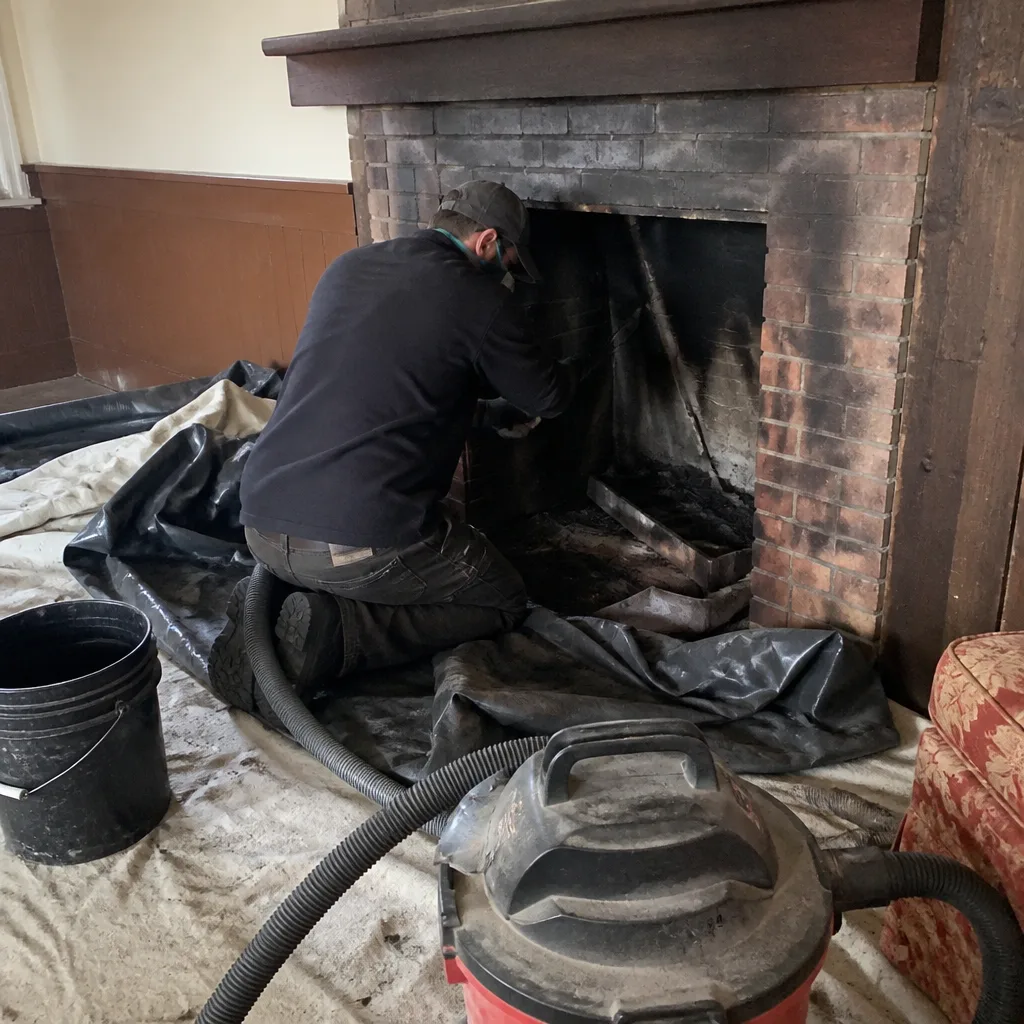 Before
 After
AfterChimney Cleaning Warning Signs: A Joliet Homeowner’s Reference Guide
The fireplace that smelled faintly of campfire last August, with no fire lit since March, wasn’t a quirk of your Joliet home’s age. In our experience across more than 38,000 chimney inspections since 2009, that odor is one of the most specific early indicators of third-degree creosote accumulation or a compromised flue liner, and it typically appears one to three seasons before any visible failure. Most homeowner guides skip these quiet signals because they require knowing what normal looks like first; for The Complete Guide to Chimney Cleaning in Joliet and more resources, see our blog. This guide establishes that baseline so you can recognize deviation while it still costs nothing to document and before it costs thousands to fix.
Quick Answer
The most important chimney warning signs are subtle deviations from normal: persistent campfire odor during humid months, white efflorescence or spalling tile in the firebox, fires that start slowly or smoke that rolls back into the room, and exterior staining or crown cracking visible from ground level. These signals precede liner failure, masonry collapse, or chimney fires by one to three seasons. Document them with dated photos and schedule an NFPA 211 Level 2 inspection with camera scan to compare your observations against a professional record, or read How to Hire a Chimney Cleaning Contractor in Joliet: A Step-by-Step Guide first.
Table of Contents
- Odor as Diagnostic: What Your Chimney Smells Like and Why It Matters
- Visual Signals in the Firebox That Precede Liner Failure
- Draft Behavior as a Flue Integrity Indicator
- Exterior Masonry Signals Visible From Ground Level
- The Documentation Step: Building Your Own Observation Record
- How Joliet’s Climate Accelerates Specific Chimney Problems
- Common Mistakes to Avoid
- When to Call a Professional
- Frequently Asked Questions
 Before
 After
AfterOdor as Diagnostic: What Your Chimney Smells Like and Why It Matters
Not all chimney odors indicate the same problem, and the distinction matters for what you’ll pay to fix it. In Joliet, where summer humidity regularly pushes 80% and basements stay damp through September, we see two distinct odor profiles that homeowners often dismiss as “just old house smell.”
Creosote odor is woody and acrid, like a campfire that won’t quite go out. It intensifies during humid weather because moisture reactivates dried creosote deposits on the flue liner walls. This smell indicates accumulated combustible residue, typically Class II or Class III creosote (the glazed, tar-like form that can’t be removed with standard brushes). In neighborhoods like Cathedral Area and East Side, where pre-1950s masonry chimneys are common, we regularly find third-degree creosote in flues that were “swept” by companies using only a rotary brush without chemical treatment. The odor is your chimney telling you the previous cleaning didn’t reach the glazed layer.
Combustion backdraft odor is sulfurous, like struck matches or rotten eggs. This indicates exhaust gases are entering your living space, which means either the flue liner has lost integrity (cracked clay tile, corroded stainless steel, or missing mortar joints) or the chimney is undersized for the appliance. In Joliet’s newer subdivisions like Shorewood and Ingalls Park, where gas inserts were retrofitted into original wood-burning fireplaces without proper liner sizing, this odor often appears during shoulder seasons when outdoor and indoor temperatures are nearly equal and natural draft is weakest.
The structural implication differs sharply. Creosote odor points to a cleaning problem that becomes a fire hazard. Backdraft odor points to a venting problem that becomes a carbon monoxide hazard. Both require camera inspection to distinguish, because the smell alone doesn’t reveal whether you’re looking at a $289 sweep or a $2,400 liner replacement-see DIY vs Professional Chimney Cleaning: The Joliet Homeowner’s Decision Guide to decide who should do the work.
Here’s how to categorize what you’re smelling:
- Woody/acrid, worse in humidity: Creosote accumulation. Schedule camera inspection before next burning season.
- Sulfurous/eggy, worse when heating system cycles: Backdrafting. Schedule inspection before next use; do not operate appliance.
- Musty/mildewy, localized to firebox: Water intrusion through crown or cap. Check exterior for visible damage; document with photos.
- No odor, but visible staining on walls near chimney: Slow leak in flue or masonry. Often the most advanced problem because it progressed without olfactory warning.
In our Joliet work, we’ve found that homeowners who document odor onset by month and weather conditions give us a diagnostic timeline that camera footage alone cannot provide. “Smell started July 2023, worst after rain” tells us to examine the crown and cap interface first, before we ever run the camera.
Visual Signals in the Firebox That Precede Liner Failure
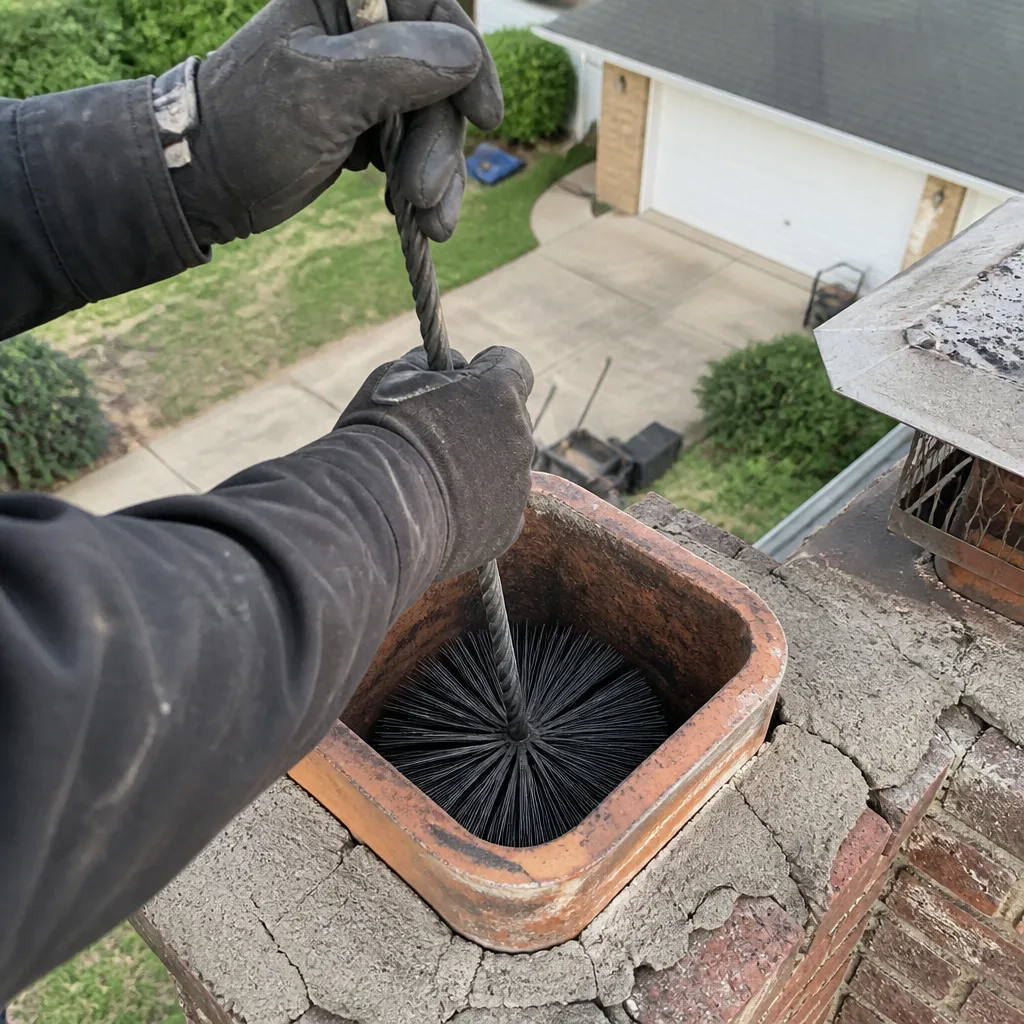
The firebox is where liner failure becomes visible first, typically two to three seasons before debris falls into the hearth or smoke enters rooms upstairs. Most Joliet homeowners we meet don’t examine their firebox until something changes dramatically, but the early signals are present if you know what normal looks like.
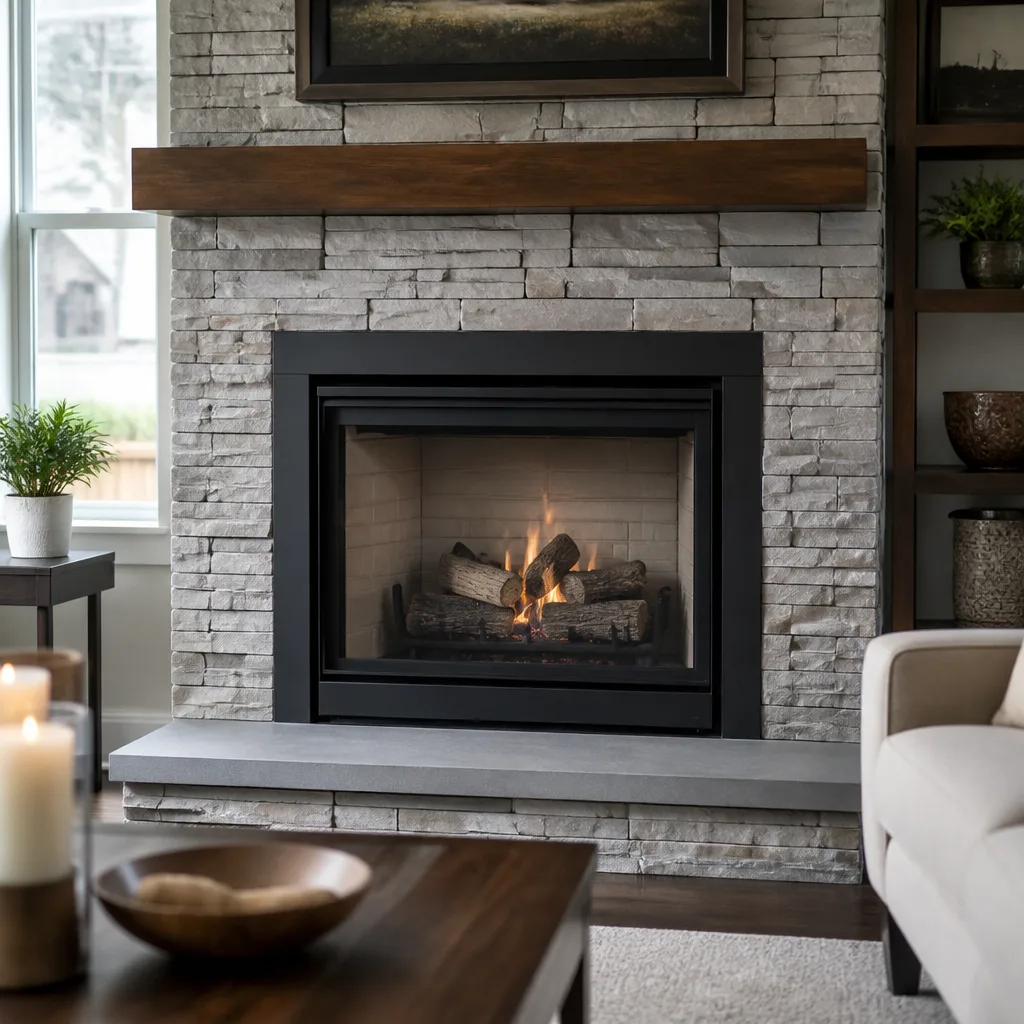
Normal firebox condition in a masonry chimney: brick faces intact, mortar joints recessed no more than 3/8 inch from the brick surface, no white powdery deposits, no tile fragments in the ash pit. In a factory-built fireplace: metal walls without warping, discoloration, or rust streaks, and refractory panels without cracks wider than a hairline.
Spalling tile fragments in the ash pit or on the smoke shelf indicate clay flue liner segments that have cracked and begun shedding pieces. The fragments are typically tan, curved, and sharp-edged, ranging from pea-sized to half a brick. In Joliet’s older housing stock, particularly in the Near West Side and Cunningham neighborhoods, we see this in chimneys built with unlined brick or with single-wythe clay tile liners installed in the 1960s and 1970s. The fragments fall because freeze-thaw cycles in our continental climate expand cracks that started as hairlines during the previous burning season. By the time fragments are visible, the liner has typically lost structural integrity in multiple segments.
White efflorescence on firebox brick is salt crystallization from moisture moving through masonry. It appears as a powdery white deposit, often in horizontal bands corresponding to mortar joints. In Joliet, where spring groundwater tables rise and summer humidity is sustained, efflorescence indicates water is entering the chimney system somewhere above the firebox, carrying dissolved salts from mortar and brick. The moisture source is usually crown cracking, cap displacement, or deteriorated flashing at the roofline. Efflorescence itself isn’t structurally dangerous, but the moisture cycle that produces it accelerates mortar joint recession and spalling.
Mortar joint recession measurable with a coin is a quantitative check any homeowner can perform. Insert a quarter into horizontal mortar joints between firebox bricks. If it slides in more than halfway (roughly 3/8 inch), the joint has eroded beyond the depth that NFPA 211 considers acceptable for containing combustion gases. In chimneys we inspect in Joliet’s Preston Heights and Fairmont areas, where coal-burning in earlier decades left acidic residues in mortar, we’ve measured recession exceeding one inch in joints that appeared superficially intact. The gases escaping through these gaps cool in surrounding framing cavities, condensing acidic moisture that damages structural members over years.
Step-by-step firebox inspection:
- Wait 48 hours after any fire; wear a headlamp and particle mask.
- Open the damper fully and shine light up the flue. Look for visible cracks in clay tile, light gaps at tile joints, or metal liner seams that have separated.
- Examine the smoke shelf (the flat area behind the damper) with a flashlight and mirror or phone camera. Accumulated debris here indicates deteriorating liner above.
- Run fingers along mortar joints; note any that are recessed enough to catch a fingernail.
- Photograph any spalling, efflorescence, or recession with date stamp. Include a coin or ruler for scale.
These observations become invaluable when a sweep arrives with a camera. Your dated photo of efflorescence from March, compared to our camera footage from October, establishes whether the moisture intrusion is active and worsening or historical and stabilized.
Draft Behavior as a Flue Integrity Indicator
A fire that used to start easily and now needs newspaper re-lit three times isn’t necessarily operator error. Draft behavior changes are among the earliest measurable indicators of flue integrity problems, and they’re often the first thing Joliet homeowners mention when they finally call us, though they’ve adapted to the degradation for two or more seasons.
Normal draft behavior: With damper fully open and a cold flue, lighting a crumpled newspaper should produce immediate upward smoke movement. Within 30 seconds, the draft should establish strongly enough that you feel air moving toward the firebox when you hold your hand at the opening. Smoke should never enter the room during normal operation.
“Slow-starting” fire indicates the flue’s effective cross-section has been reduced. This happens through several mechanisms we’ve documented in Joliet chimneys: creosote buildup narrowing the liner diameter, partial collapse of clay tile segments creating an obstruction, bird or squirrel nesting in an uncapped flue (common in Joliet’s tree-canopied neighborhoods like Pilcher Park and Hickory Creek), or a chimney cap with clogged screening that restricts exhaust flow. The reduction can be surprisingly small; a 12×12 inch clay flue tile reduced to 10×10 effective area by glaze deposits loses approximately 30% of its draft capacity.
Smoke rollback (smoke entering the room when the fire is first lit or when adding fuel) indicates negative pressure in the house exceeding the chimney’s draft capacity, or a flue that can’t establish sufficient draft at low temperatures. In Joliet’s tighter new construction, particularly in subdivisions built after 2015 with continuous insulation and mechanical ventilation, we regularly encounter smoke rollback in fireplaces that drafted fine in the builder’s model home. The difference is often that the model had atmospheric combustion water heaters and the purchased home has power-vented or tankless units, removing a key source of house depressurization. The fireplace becomes the path of least resistance for makeup air.
Downdraft on windy days is location-specific and predictable in Joliet. Prevailing westerlies across the flat Illinois prairie create pressure differentials on chimney tops that can reverse draft in shorter chimneys or those without proper cap height. But if downdraft occurs on calm days, or in a chimney that never had this problem before, the cause is typically liner damage that has destroyed the flue’s aerodynamic smoothness. A cracked clay tile or separated metal liner segment creates turbulence that allows wind to push exhaust downward.
Document draft behavior with specificity: “Fire needs three re-lights since November 2023, wasn’t this way in 2022.” “Smoke rolls back when adding oak logs, not pine.” “Problem only on days below 20°F.” This granularity directs our camera inspection to the right hypotheses and often saves diagnostic time that translates to lower quoted scope.
Exterior Masonry Signals Visible From Ground Level
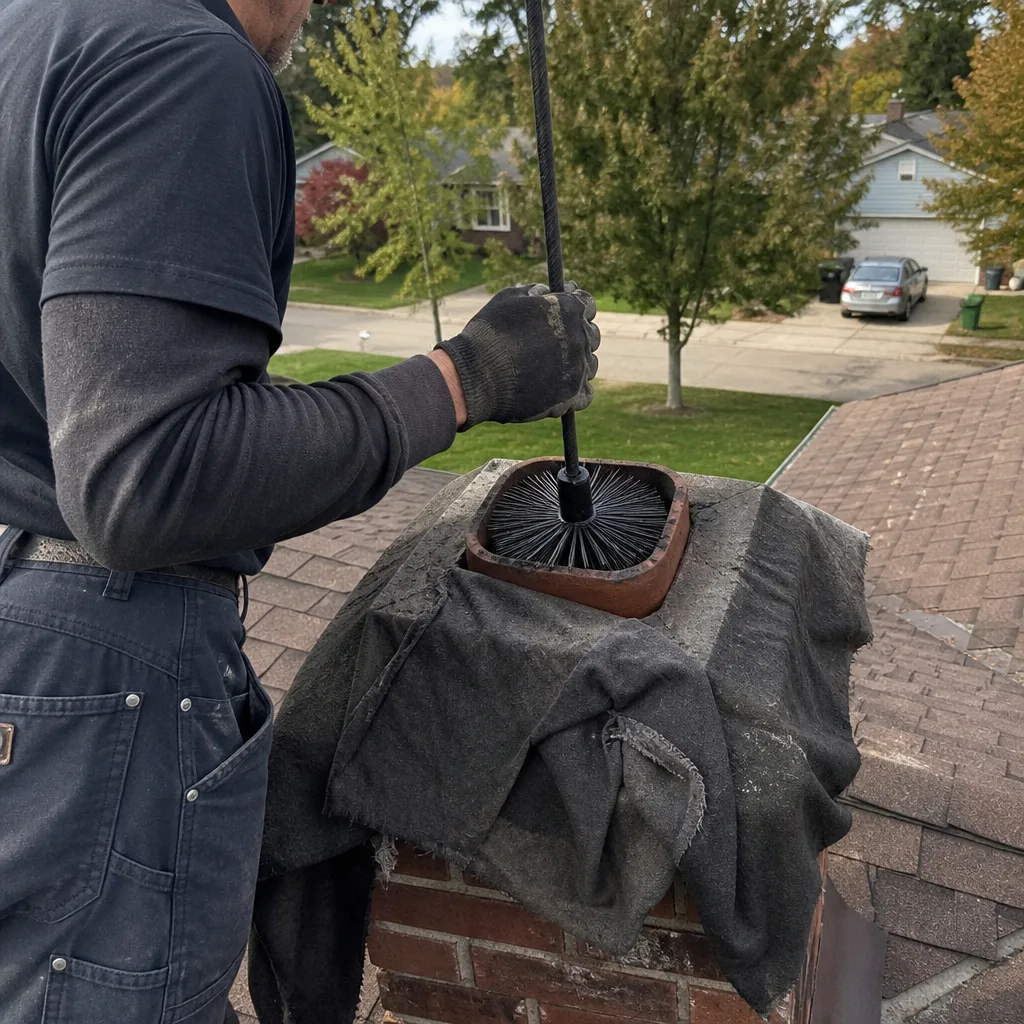
You don’t need a ladder or a drone to identify significant chimney problems. From your driveway or sidewalk, several staining patterns and structural indicators reveal what’s happening inside the flue and at the chimney top. In Joliet, where we get 38 inches of annual precipitation concentrated in spring storms and summer downpours, exterior damage progresses faster than in drier climates.
Dark vertical staining on the chimney face indicates water running down the exterior, typically from crown failure or missing cap. The stain pattern matters: a single dark streak centered on the chimney face suggests a crown crack directly above; multiple streaks or staining that wraps around corners indicates cap displacement or severe crown deterioration. In Joliet’s limestone-rich areas, where masonry is often soft common brick rather than hard-burned clay, we’ve seen crown cracks propagate from hairline to quarter-inch in a single freeze-thaw cycle. The dark staining is soot and creosote particles carried by water that has entered the flue, mixed with combustion residue, and exited through masonry pores.
White horizontal banding (efflorescence on the exterior) indicates the same moisture-salt mechanism as interior firebox efflorescence, but at scale. When you see white bands at multiple heights, water is entering through multiple points, usually indicating systematic flashing failure or widespread mortar joint loss. In Joliet’s older homes with stepped chimneys on gable ends, this pattern often traces to original lead flashing that has work-hardened and cracked at the step bends.
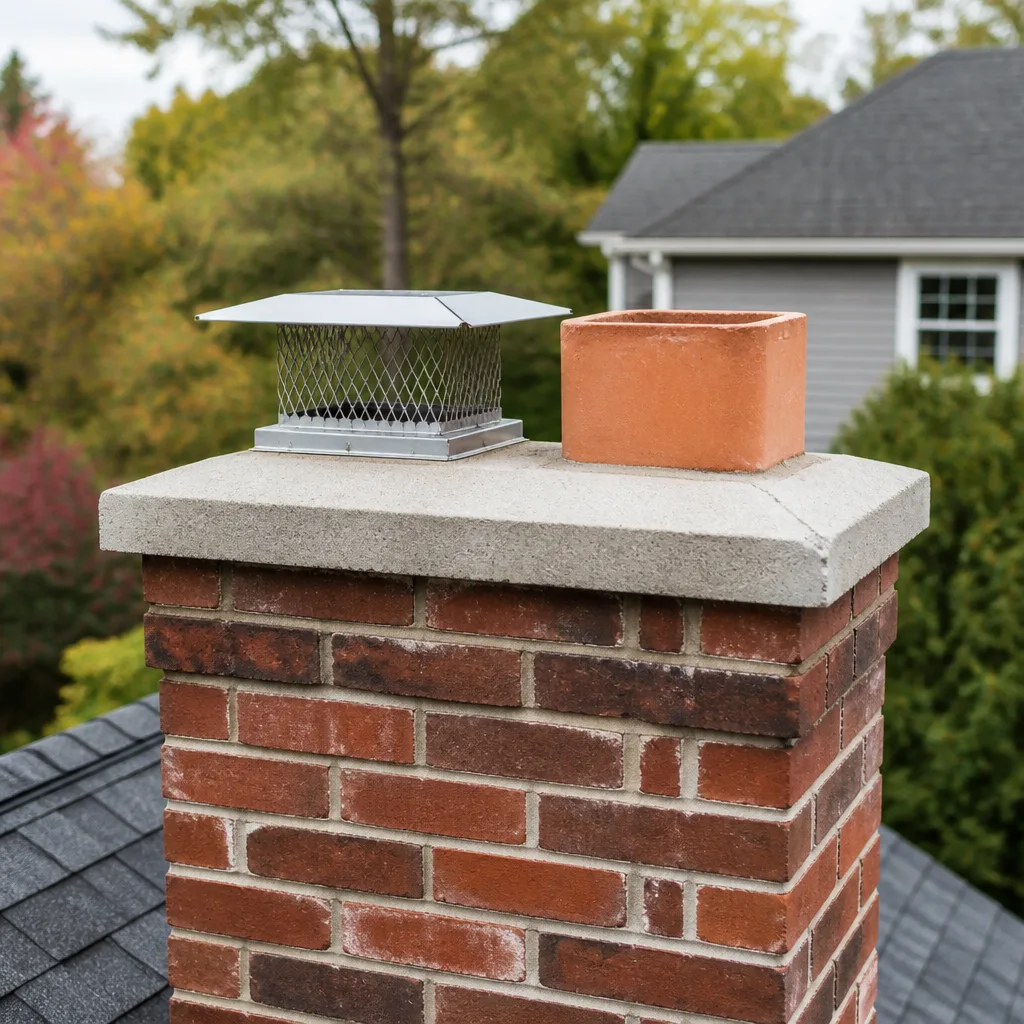
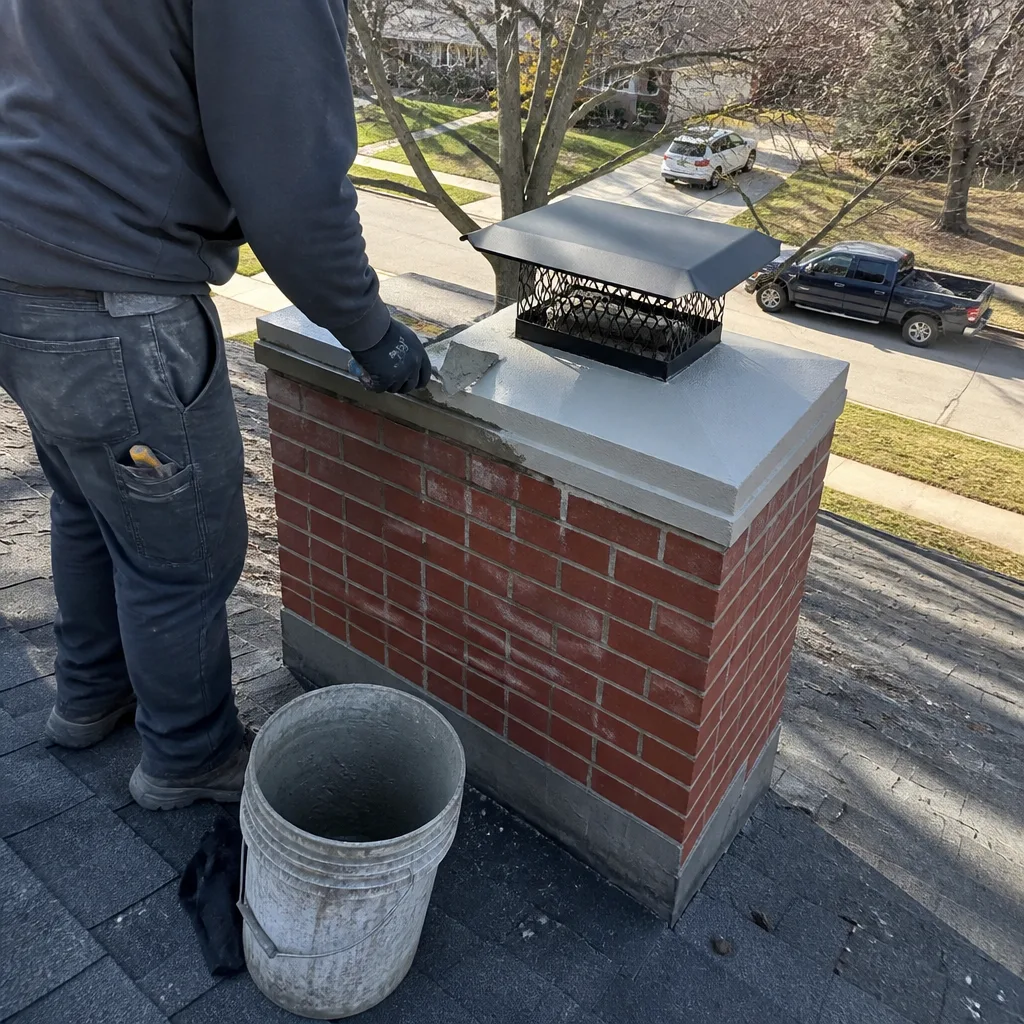
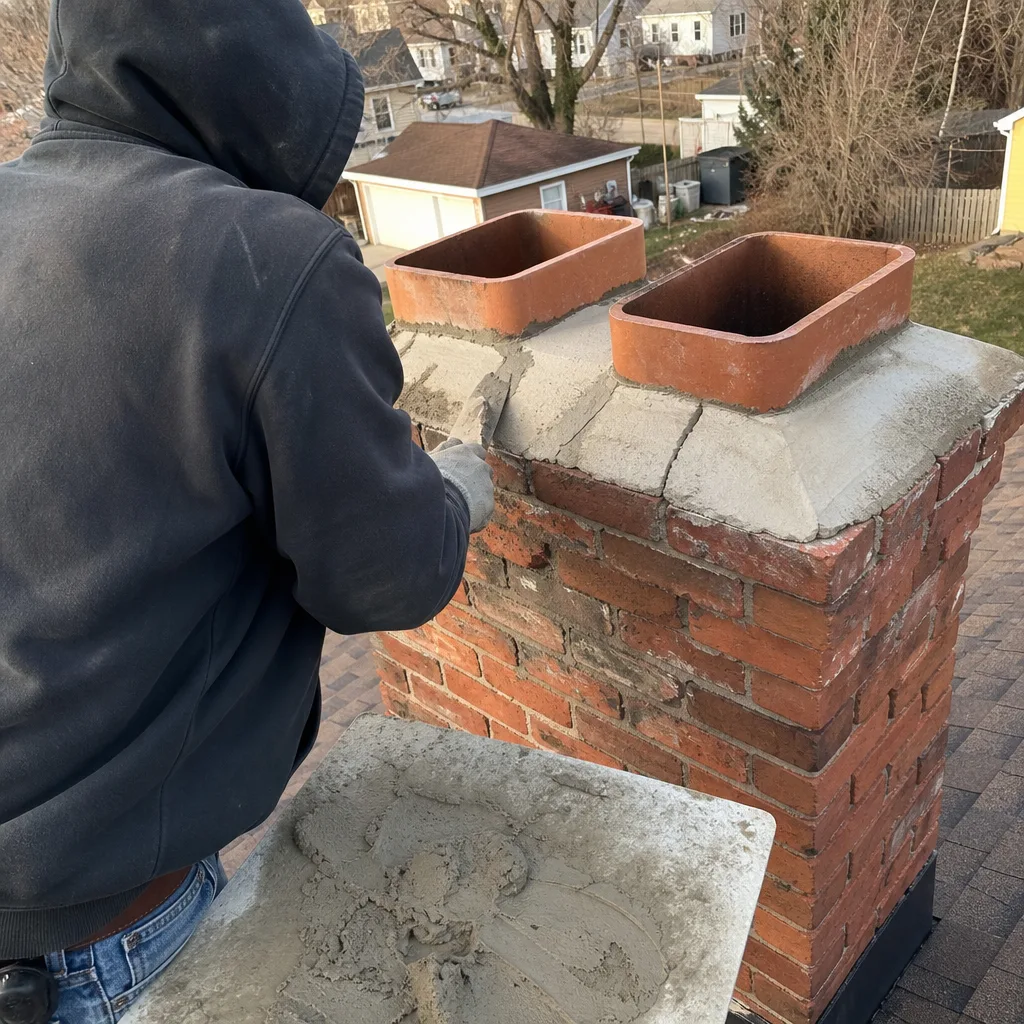
Cap damage visible from ground level includes: missing or displaced cap (you see open flue tile), cap with visible rust streaks on the chimney face (galvanized steel cap failing), or cap that appears tilted (indicating deteriorated mortar bed or underlying crown collapse). A cap costs $180-$340 installed; the water damage from a missing cap over one Joliet winter can exceed $2,000 in liner and masonry repair.
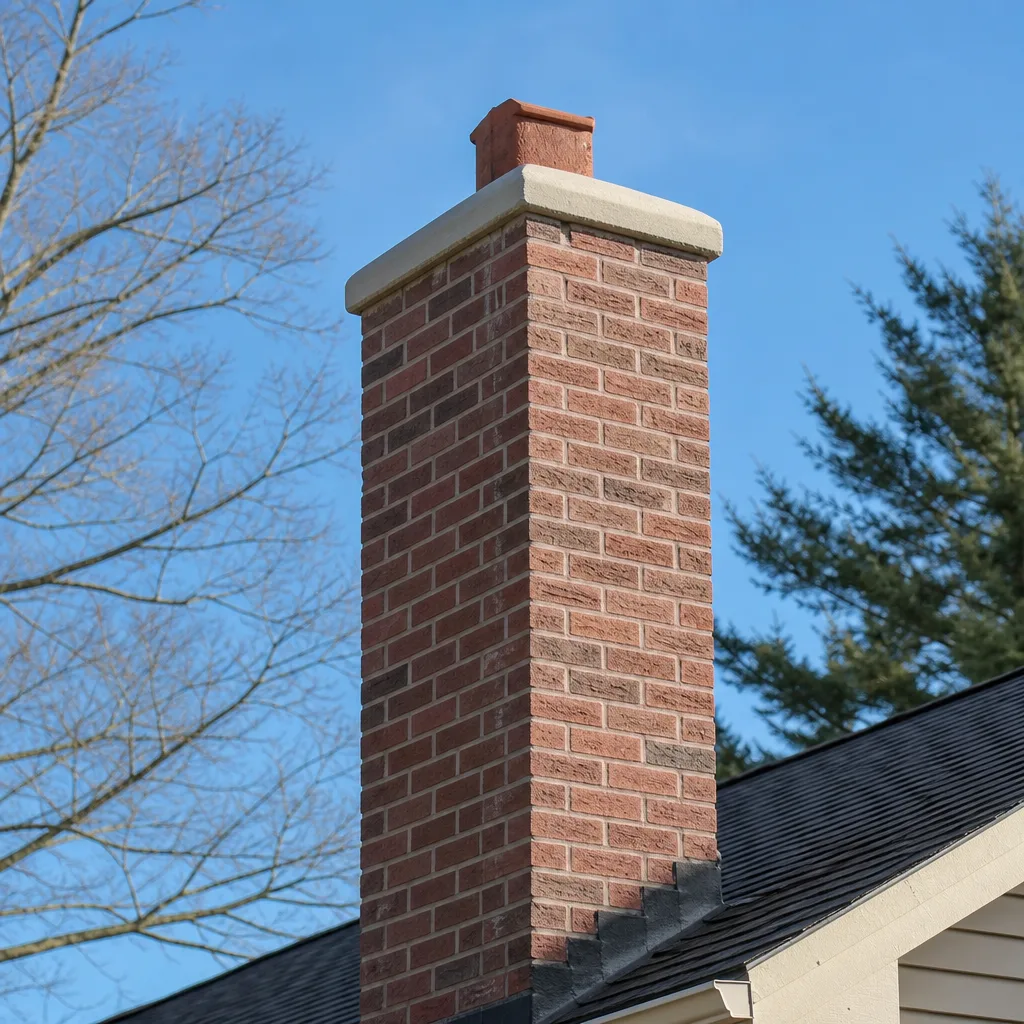
Crown cracking is visible as dark lines across the concrete or mortar cap that tops the chimney. A sound crown sheds water past the chimney faces; a cracked crown funnels water into the flue and between wythes. From ground level, look for: single transverse crack (thermal expansion stress), radial cracking from the flue opening (improper crown construction without expansion joint), or missing chunks at edges (freeze-thaw spalling). Crown repair with proper slope and drip edge runs $400-$700 in Joliet; full crown replacement with waterproofing is $800-$1,400.
Spalling brick faces appear as missing or flaking brick surfaces, exposing the softer interior. This is advanced freeze-thaw damage that indicates the brick has reached saturation point repeatedly. In Joliet, where brick from the 1920s-1950s was often underfired for local use, we see this particularly in neighborhoods like Rockdale and Joliet Junction. Spalling brick is not cosmetic; each spalled face removes the brick’s protective “fire skin” and accelerates deterioration of the entire wythe.
Photograph exterior conditions after significant weather events: the March ice storm, the July thunderstorm, the first hard freeze. Date-stamped exterior photos, compared year over year, often reveal progression that casual observation misses.
The Documentation Step: Building Your Own Observation Record
The gap between homeowner observation and professional inspection is where expensive misunderstandings happen. You smell something, see something, or notice draft behavior changing. Six months later, a sweep arrives, runs a camera, and presents findings. Without your own dated record, you have no way to determine whether the problem is new, worsening, or stable, and no basis to evaluate whether recommended work is urgent or can be scheduled.
The Haven Standard’s Clause 4 requires that we provide a documented photo record on every job. But that record starts when we arrive. Your documentation from the months before creates the timeline that makes our record meaningful.
Step-by-step homeowner documentation protocol:
- Create a chimney log. A simple digital note or dedicated folder. Record date, weather conditions, and any observation: odor, visual change, draft behavior, or exterior appearance after storms.
- Photograph with purpose. Include a scale object (coin, ruler, your hand) and a date stamp. For firebox: wide shot showing full firebox, close-up of any spalling or efflorescence, detail of mortar joint with coin inserted. For exterior: full chimney from ground level, zoomed detail of any staining or cracking, roofline showing flashing condition if visible from a second-story window.
- Note the “normal” baseline. Photograph your firebox and chimney exterior when you believe everything is fine. This gives you comparison images when you suspect change. Most homeowners skip this step and regret it.
- Record appliance and fuel details. What burns in this fireplace or appliance? Seasoned hardwood, manufactured logs, natural gas, propane? How often, and at what duration? This determines expected creosote accumulation rate and liner wear pattern.
- Preserve prior professional records. If you’ve had previous sweeps or inspections, keep the written scope, any photos provided, and the invoice with company name and date. We regularly find that “annual sweeps” documented only by a credit card charge were visual inspections without camera documentation.
When you call Level Two Chimney Joliet home, mention that you have a documentation record. We’ll schedule to allow time for review before the inspection, and we’ll reference your observations in our written findings. The comparison between your March photo of efflorescence and our October camera footage of liner condition often determines whether we recommend immediate repair or monitored observation.
This practice became standard for us in 2009, before NFPA 211 required camera inspection for real estate transactions and before insurers began requesting documentation. It’s now Clause 4 of the Haven Standard because we’ve seen too many homeowners pay for unnecessary work when no timeline existed, and too many delay necessary work when progression couldn’t be demonstrated.
How Joliet’s Climate Accelerates Specific Chimney Problems
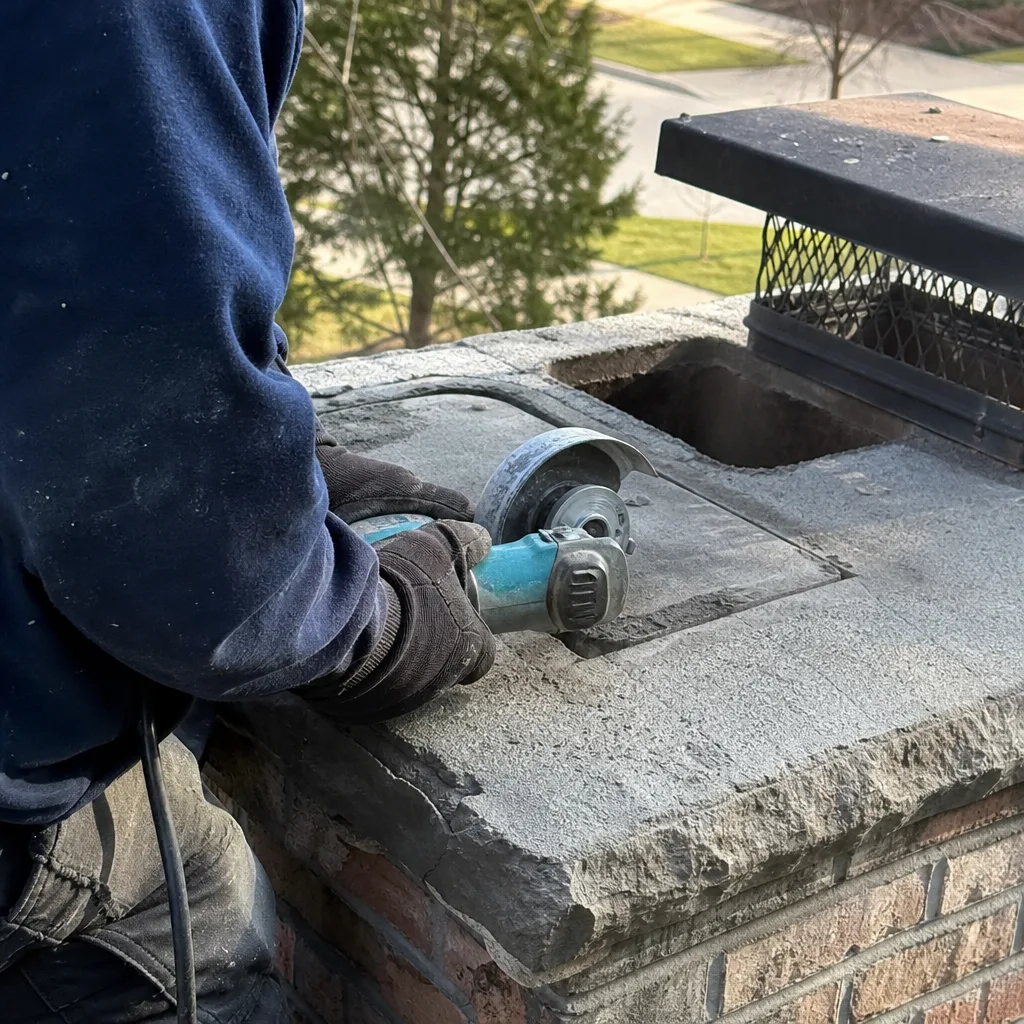
Joliet’s location at the edge of the prairie-woodland transition, with continental temperature extremes and lake-effect moisture influence, creates chimney deterioration patterns distinct from both drier western climates and more consistently humid southeastern ones. Understanding these local accelerators helps interpret warning signs correctly.
Freeze-thaw cycling in Joliet averages 30-40 cycles annually (temperature crossing 32°F in 24 hours), concentrated in November-December and February-March. Each cycle, water in masonry pores expands 9% upon freezing. Crown mortar without air entrainment, common in pre-1990 construction, typically fails structurally within 10-15 years of exposure; we’ve replaced crowns on 1980s Joliet homes that showed complete disintegration. The warning sign is hairline cracking that progresses to spalling over two to three winters.
Spring groundwater rise affects Joliet’s older neighborhoods with shallow foundations and perimeter drains that have failed. In areas like the East Side, where basements are common and water tables are high, we’ve measured moisture content in firebox brick exceeding 20% during April and May, even without roof-level water intrusion. This moisture reactivates creosote odors and accelerates metal liner corrosion. The warning sign is musty firebox smell that peaks in spring, independent of recent precipitation.
Summer humidity and stagnant air create the conditions for creosote odor reactivation and for biological growth on damp masonry. In Joliet’s July-August periods with dew points above 70°F, we receive the highest volume of odor complaints. The warning sign is woody/acrid smell that appears or intensifies specifically during humid weather, not during or immediately after burning.
Prairie wind exposure without topographic protection accelerates cap and crown damage from wind-driven rain, and creates downdraft conditions in shorter chimneys. In Joliet’s open subdivisions and rural-exurban properties, we see cap displacement and flashing lift that would be uncommon in more sheltered locations. The warning sign is water entry that seems disproportionate to visible roof damage, or draft problems specifically on windy days.
Hard water and mineral content in Joliet’s municipal supply, drawn from deep sandstone aquifers, contributes to efflorescence when water evaporates from masonry. The salt deposits are calcium and magnesium carbonates, visually similar to efflorescence from atmospheric moisture but indicating different sources. The warning sign is white deposits that recur quickly after cleaning, particularly on exterior chimney faces above the roofline.
These climate factors mean that a Joliet chimney typically shows warning signs 20-30% earlier in its service life than the same construction in a more moderate climate. The national recommendation of annual inspection for active fireplaces becomes, in our local experience, a minimum; heavily used systems in exposed locations often benefit from mid-season checks.
Common Mistakes to Avoid
- Assuming no odor means no problem. Carbon monoxide and some combustion backdrafts are odorless. A chimney can have dangerous liner damage with no smell at all. The absence of odor is not evidence of safety.
- Trusting a “clean” firebox as proof of flue condition. The firebox is accessible and easily cleaned; the flue liner above is not. We’ve found Class III creosote and cracked tile in flues whose fireboxes were spotless.
- Waiting for “burning season” to schedule inspection. In Joliet, sweep availability compresses between October 15 and December 1. Scheduling in spring or summer means better technician availability, more time for any needed repairs before cold weather, and often lower pricing. Warning signs documented in August can be addressed before they become urgent.
- Accepting a flashlight inspection as sufficient. NFPA 211 Level 1 inspection is visual only, from accessible areas. It cannot evaluate flue liner condition beyond the damper opening. Level 2 with camera scan is required for any sale, transfer, or change of appliance, and is the appropriate standard when warning signs are present.
- Ignoring neighborhood-specific risks. In Joliet’s historic districts with mature tree canopy, uncapped flues have higher wildlife intrusion risk. In newer subdivisions with tight construction, negative pressure issues are more common. Generic advice doesn’t address your specific situation.
- Not comparing photo records between service providers. If a previous sweep provided no photos, you have no baseline. If they provided photos but no written scope with specific measurements, the photos lack interpretive context. Clause 4 of the Haven Standard requires both.
- Delaying documentation because “it’s probably nothing.” The warning signs in this guide are selected precisely because they’re ambiguous and easy to dismiss. Documenting costs nothing; not documenting costs clarity when you eventually need professional evaluation.
When to Call a Professional
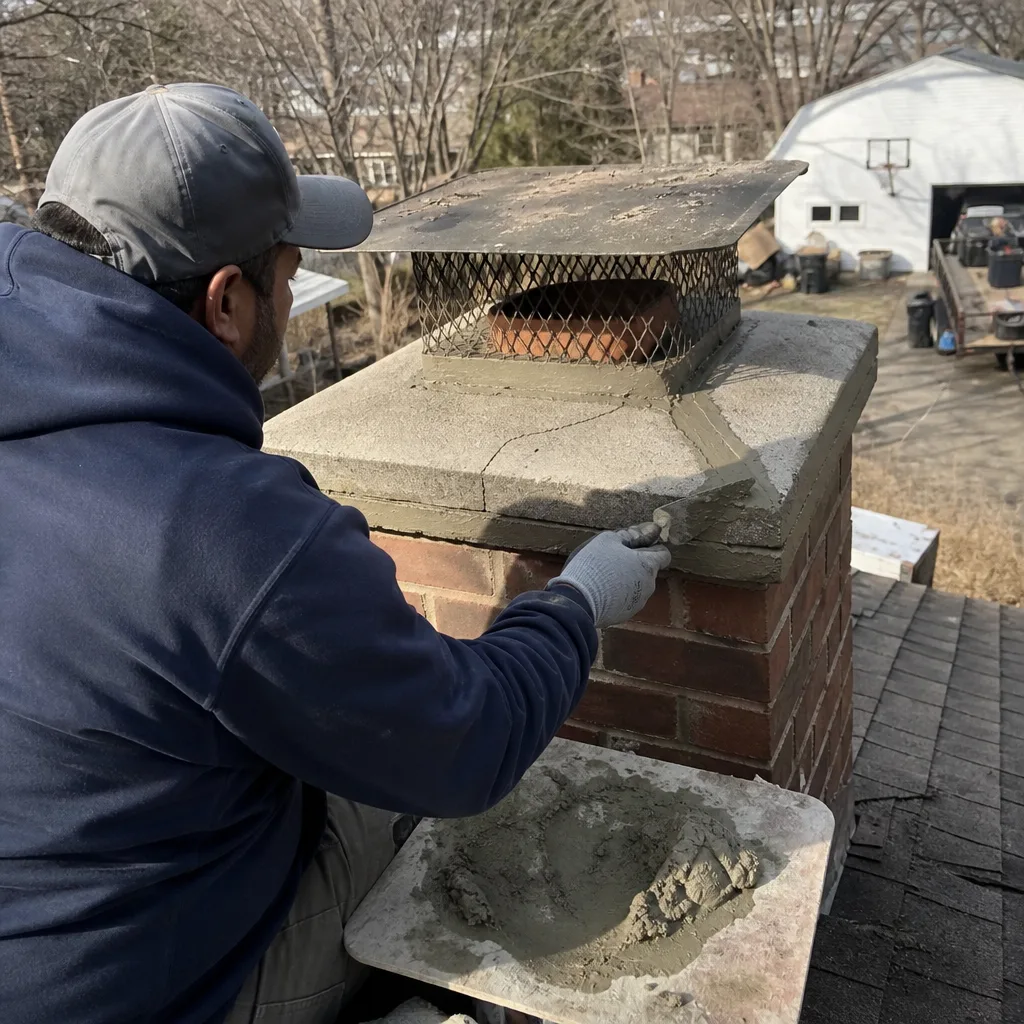
Call for an NFPA 211 Level 2 inspection with camera scan when: you observe any of the warning signs described in this guide, particularly odor during non-burning months, visible spalling or efflorescence, or draft behavior changes; you’re purchasing a home with an active fireplace or heating appliance; you’re changing fuel types or installing a new insert; or it’s been more than 12 months since your last documented inspection. In Joliet, where climate stressors accelerate deterioration, we recommend not exceeding 12 months for active wood-burning systems, and not exceeding 24 months for gas systems with proper prior documentation.
Do not operate a fireplace or appliance if you smell combustion gases (sulfurous/eggy odor), if smoke enters living spaces during normal operation, or if you observe fallen tile fragments or debris in the firebox. These indicate conditions that pose immediate health or fire risk.
Chimney Cleaning & Sweep in Joliet from Level Two Chimney Joliet includes the camera-scan inspection and documented photo record as standard, not as an add-on. We offer free estimates in Joliet and surrounding Will County communities, and we provide a Free Second Opinion on any competitor’s written estimate. Call (815) 620-5234 to schedule, or to discuss documentation you’ve collected and what it might indicate.
Frequently Asked Questions
A complete chimney cleaning and NFPA 211 Level 2 inspection with camera scan in Joliet typically ranges from $289 to $449, depending on flue configuration, accessibility, and creosote condition. This includes the documented photo record required by Haven Standard Clause 4, a written scope of any recommended repairs, and our written price before any additional work begins. Call (815) 620-5234 for an exact quote for your specific chimney, estimates are free, and explore more guides & resources on our blog.
A sweep cannot definitively determine liner condition without a camera inspection. Visual inspection from the firebox reveals only the bottom two to three feet of liner; the majority of failure occurs higher in the flue where temperature cycling is most extreme. In our Joliet inspections, we’ve documented cracked tile at 15 feet above the firebox that was completely invisible from below. We recommend nothing without camera evidence you can see for yourself, and we’ll show you exactly what we found and where. If a competitor recommends liner replacement without camera footage, bring us their written estimate for a Free Second Opinion.
Active wood-burning fireplaces and stoves in Joliet should be inspected annually and cleaned as needed based on creosote accumulation, which varies with fuel quality, burning practices, and flue configuration. Gas fireplaces and appliances should be inspected every one to two years. The specific interval depends on your documentation record: a chimney with stable camera-documented condition may extend toward the longer interval, while one showing progression of warning signs needs more frequent monitoring. We do not recommend exceeding 12 months for wood-burning systems in Joliet’s climate.
Skipped maintenance leads to progressive, predictable damage: creosote accumulates from Class I (sooty, brush-removable) to Class III (glazed, requires chemical treatment), increasing chimney fire risk; liner cracks expand, allowing combustion gases into wall cavities and eventually requiring full liner replacement; crown and cap deterioration admits water, causing masonry spalling and, in advanced cases, structural chimney lean. In Joliet, we’ve rebuilt chimneys that could have been maintained for decades because maintenance was deferred past the point where warning signs were visible. The cost progression is roughly: maintenance sweep ($289-$449), delayed maintenance with minor repair ($800-$1,500), major repair ($2,400-$5,000), rebuild ($8,000-$15,000+). Call (815) 620-5234 to schedule before skipped maintenance becomes major repair.
Summer odor from an unused chimney indicates either creosote reactivation by humidity (woody/acrid smell, requires cleaning) or water intrusion carrying biological growth (musty smell, requires leak source repair). In Joliet’s humid summers, both are common. The specific smell character tells us which to investigate first. Document when the smell appears, what weather conditions accompany it, and whether it’s localized to the firebox or detectable in rooms above. This information directs our inspection efficiently.
Homeowners can and should perform the visual and observational checks described in this guide: odor monitoring, firebox examination, draft behavior observation, and exterior photography. These create the documentation timeline that makes professional inspection more valuable. However, flue liner evaluation requires specialized camera equipment and training; NFPA 211 Level 2 inspection is not a DIY procedure. We encourage homeowner observation as complementary to, not replacement for, professional inspection with documented record.
Level 1 inspection is visual examination of readily accessible portions of the chimney exterior, interior, and connecting appliances, without specialized tools. It’s appropriate for annual maintenance of chimneys with no changes and no warning signs. Level 2 inspection includes everything in Level 1 plus examination by video scanning or other means of all interior flue surfaces, all accessible portions of the exterior, and the attic, crawl space, or basement as appropriate. It’s required for real estate transactions, changes of appliance or fuel type, and whenever warning signs are present. Level Two Chimney Co. performs Level 2 as our default standard because it provides the documentation that Clause 4 of the Haven Standard requires.
The Bottom Line
The chimney problems that cost Joliet homeowners thousands are rarely sudden catastrophes. They’re the predictable result of warning signs that appeared one to three seasons earlier and were dismissed as quirks of an old house or normal variation. A faint campfire odor in August, a few tile fragments in the ash pit, a fire that needs an extra match, a dark streak on the chimney face: each is a specific indicator with a specific structural cause, and each can be documented at no cost before it requires expensive correction. The baseline of normal, once established, makes deviation recognizable. The documentation habit, once started, provides the timeline that separates urgent repair from monitored observation. Schedule your inspection when you first notice change, not when the change becomes unavoidable. Chimney Repair in Joliet and Fireplace Services in Joliet from Level Two Chimney Joliet include the camera documentation and written record that makes your own observation record actionable.
Written by Corrine Halstead, Owner at Level Two Chimney Joliet, serving Joliet since 2009.