
Last updated September 22, 2026
Level 1 sweep and inspection to the NFPA 211 annual standard - flue, crown, cap, and flashing checked and photographed
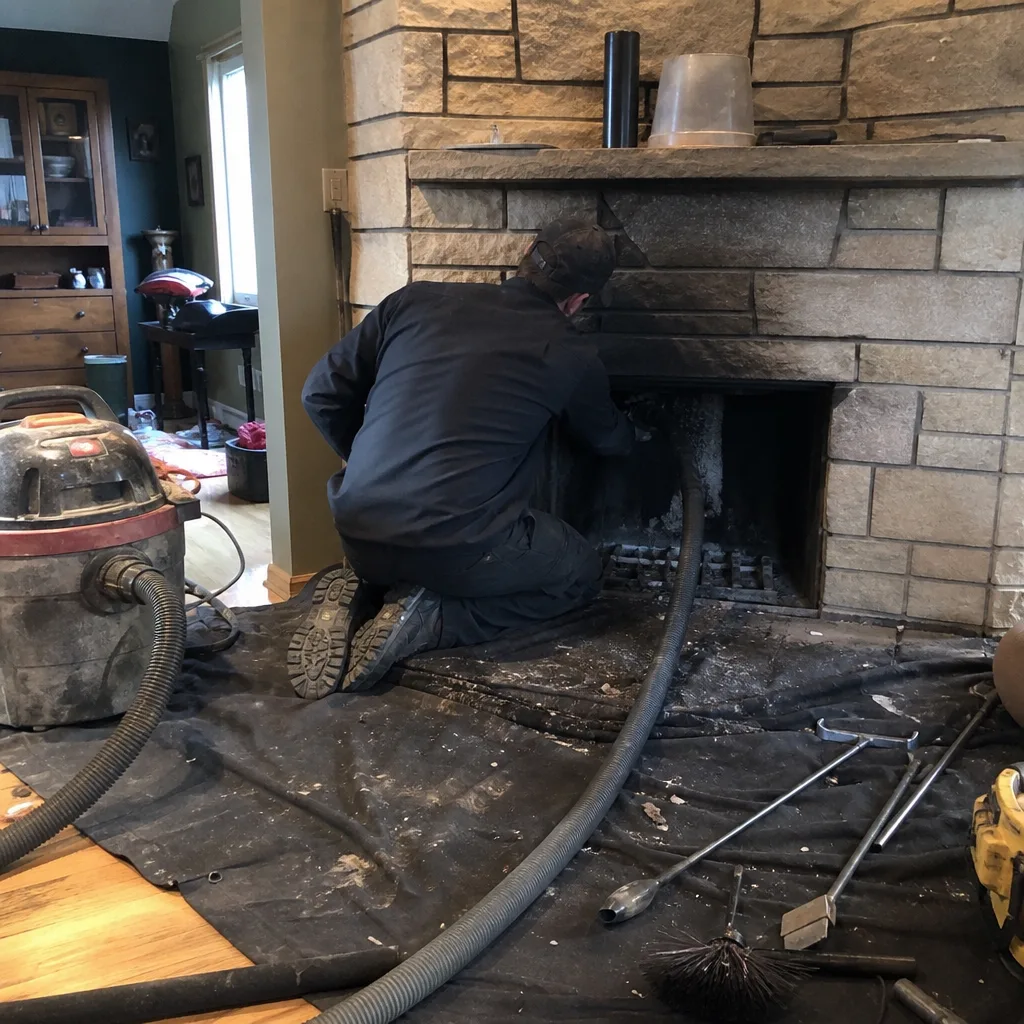
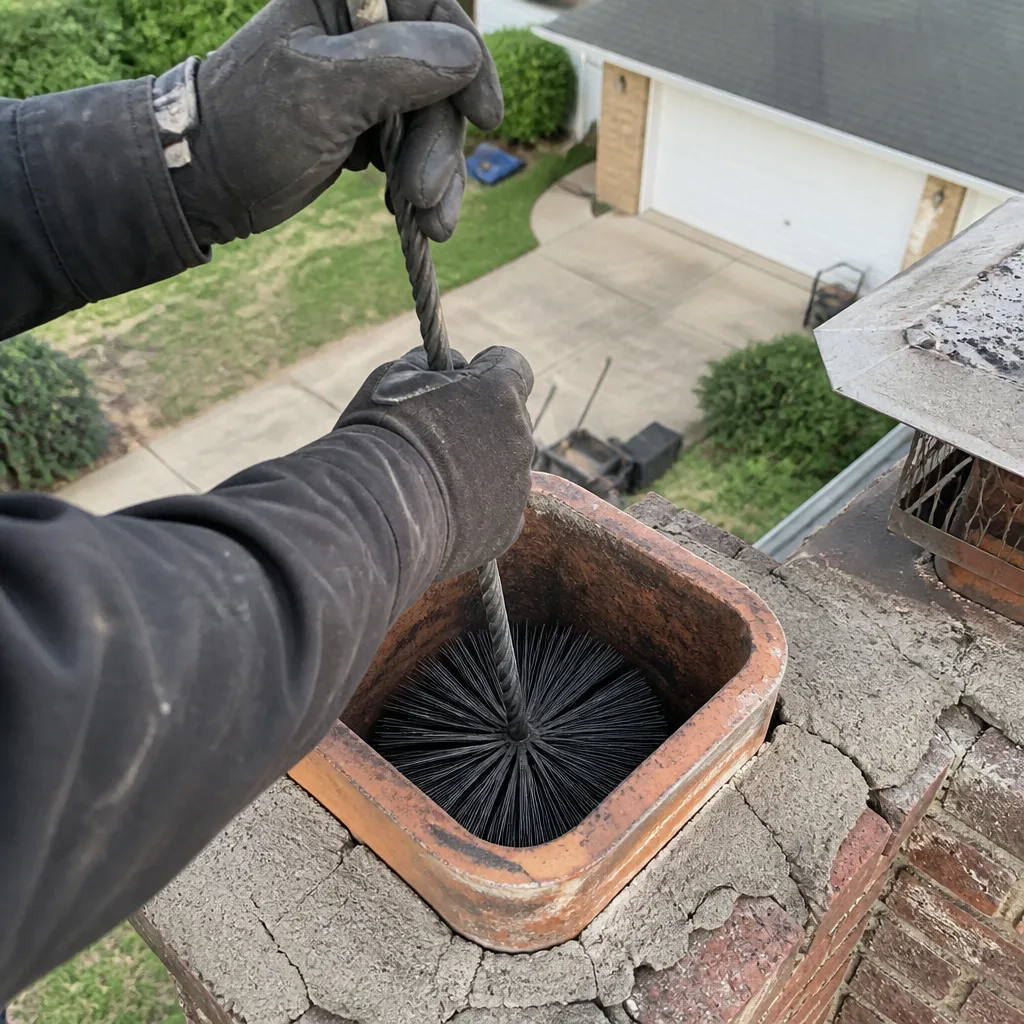
Chimney sweep logs do not sweep chimneys. They loosen some creosote - which then falls where a brush and vacuum still have to collect it.
 Before
 After
After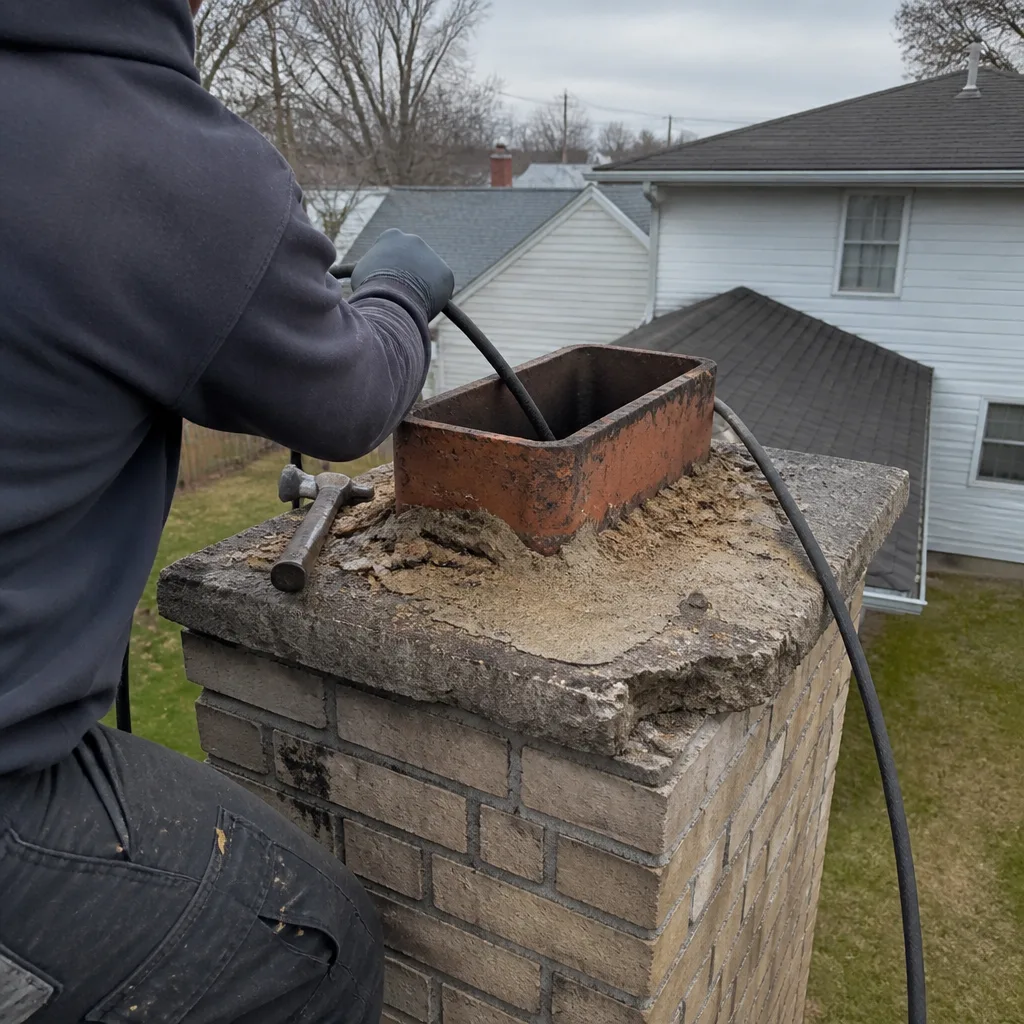 Before
 After
After Before
 After
AfterChimney Cleaning & Sweep Maintenance Checklist for Joliet Homeowners
Most chimney checklists tell you to “inspect the damper” without explaining that a damper that moves freely can still be warped enough to vent combustion gases into your living room - a detail no mirror-and-flashlight routine will catch. After 38,000 chimney inspections across Joliet and the southwest suburbs, we’ve learned that homeowners who know what observable evidence actually matters catch problems 18 months earlier than those running through generic checklists. This guide gives you a room-by-room observation sequence, specific measurement thresholds, and a documentation system that turns you into a capable first inspector - not a dependent customer waiting for bad news. For deeper reading, see our The Complete Guide to Chimney Cleaning in Joliet.
Quick Answer
Joliet homeowners should perform ground-level chimney observations monthly during burning season, schedule a professional Chimney Cleaning & Sweep with NFPA 211 Level 2 inspection and camera scan every 12 months, and document all findings with dated photos. A proper maintenance checklist tracks creosote odor strength, mortar joint recession beyond ¼ inch, draft behavior changes, and interior masonry staining - with clear call-a-pro thresholds for each.
Table of Contents
- Why Generic Checklists Fail Joliet Homeowners
- The Room-by-Room Observation Sequence
- What to Measure, Photograph, and File
- Seasonal Timing Calibrated to Joliet’s Climate
- Verifying Your Sweep’s Post-Service Record
- Common Mistakes to Avoid
- When to Call a Professional
- Frequently Asked Questions
 Before
 After
AfterWhy Generic Checklists Fail Joliet Homeowners
Standard chimney checklists assume a neutral climate and masonry that behaves predictably. Joliet’s freeze-thaw cycle - typically 40+ annual swings between above-freezing days and below-freezing nights - punishes brick and mortar differently than steady-cold northern Illinois or temperate southern climates. Water enters hairline cracks in October, freezes by November, and exfoliates mortar faces by March. A checklist that doesn’t account for this acceleration is worse than useless; it creates false confidence.
The second failure mode is vagueness. “Check for cracks” doesn’t tell you that vertical cracks in the firebox rear wall often indicate a settled foundation common in Joliet’s older east-side neighborhoods near the Des Plaines River floodplain, where expansive clay soils shift seasonally. “Listen for odd sounds” misses that a chirping noise during a cold start in a Plainfield-adjacent split-level often means a bird guard collapsed - a $180 fix if caught early, a $2,400 smoke chamber rebuild if ignored through a full burning season.
Our approach, developed through the Haven Standard since 2009, treats the homeowner as the first line of documentation. The camera scan we perform during every Chimney Cleaning & Sweep in Joliet confirms what you observed - or explains why your observation didn’t match the internal condition. Either outcome is useful.
Three principles separate an effective checklist from a feel-good exercise:
- Observable, not interpretable. “Rust stain on damper” is a fact you can photograph. “Damper looks worn” is an opinion that varies by person.
- Threshold-based, not presence-based. A ⅛-inch mortar joint recession gets noted and monitored. A ¼-inch recession triggers a call. The number removes hesitation.
- Documented, not remembered. Insurance adjusters after a chimney fire in Joliet’s Cathedral Area or on the west side near Louis Joliet Mall ask for maintenance records. “I think we had it checked” costs you thousands.
The Room-by-Room Observation Sequence
This sequence takes 12 minutes once you learn it. Run it monthly from October through March, and once in September before first fire. Start at the top of the house and work down - gravity moves chimney problems downward, and catching them at origin prevents false attribution.
Attic: The Overlooked Inspection Point
Most Joliet homes built between 1965 and 1995 have metal chimney chases in the attic that never got proper clearance to combustibles. Stand at the attic access and look for:
- Discoloration on framing within 2 inches of the chimney chase - indicates pyrolysis, the slow heating of wood to ignition temperature over years of contact
- White crystalline deposits (efflorescence) on the chase exterior - water is migrating through masonry and evaporating, leaving mineral salts
- Daylight visible around the chase where it penetrates the roof deck - a pathway for embers during a chimney fire
Photograph anything you find. Attic findings are the highest-urgency items on this checklist because they’re invisible from living spaces until failure.
Roof Exterior: What You Can See From Ground or Ladder
Do not climb onto a steep roof. Use binoculars from the driveway or a ladder positioned at the eaves. In Joliet’s Riverwalk and East Side neighborhoods, where many roofs are 8/12 pitch or steeper, falls from height are the leading cause of home-maintenance injury.
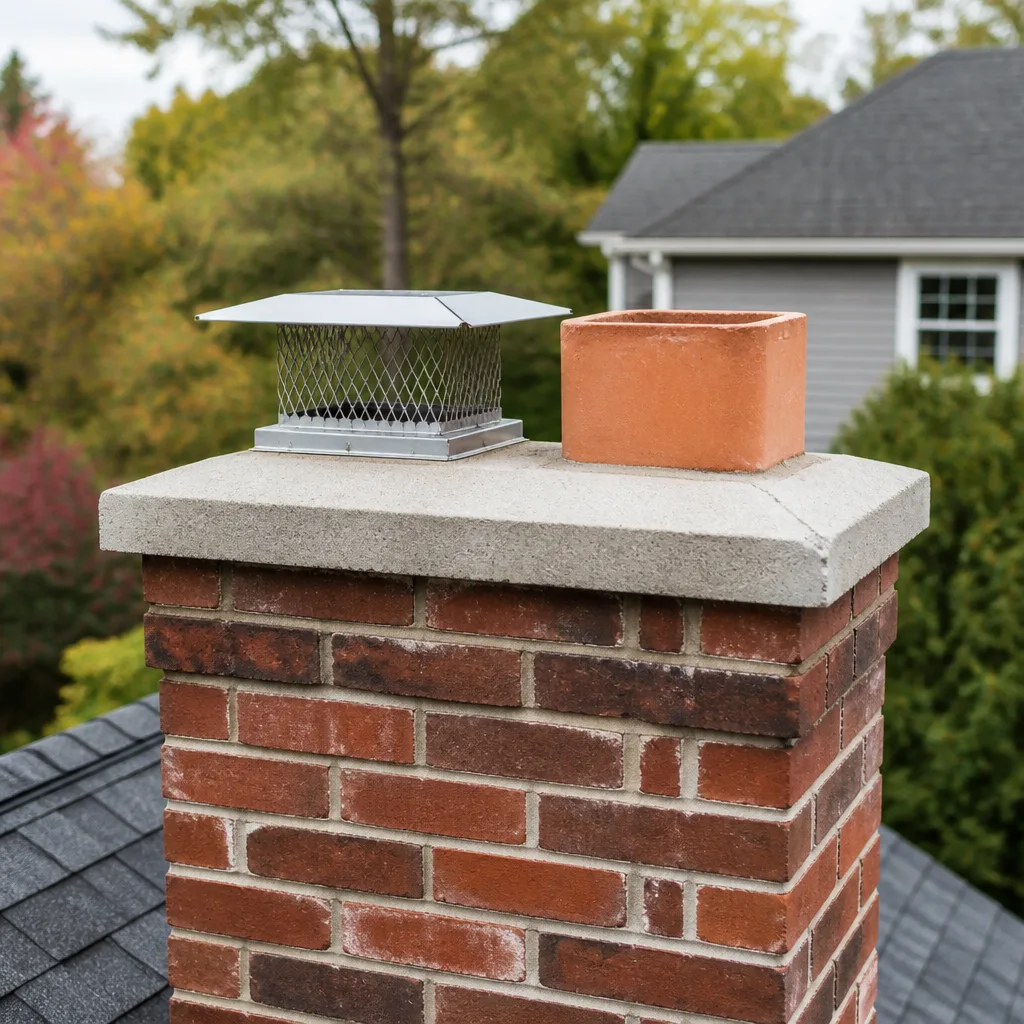
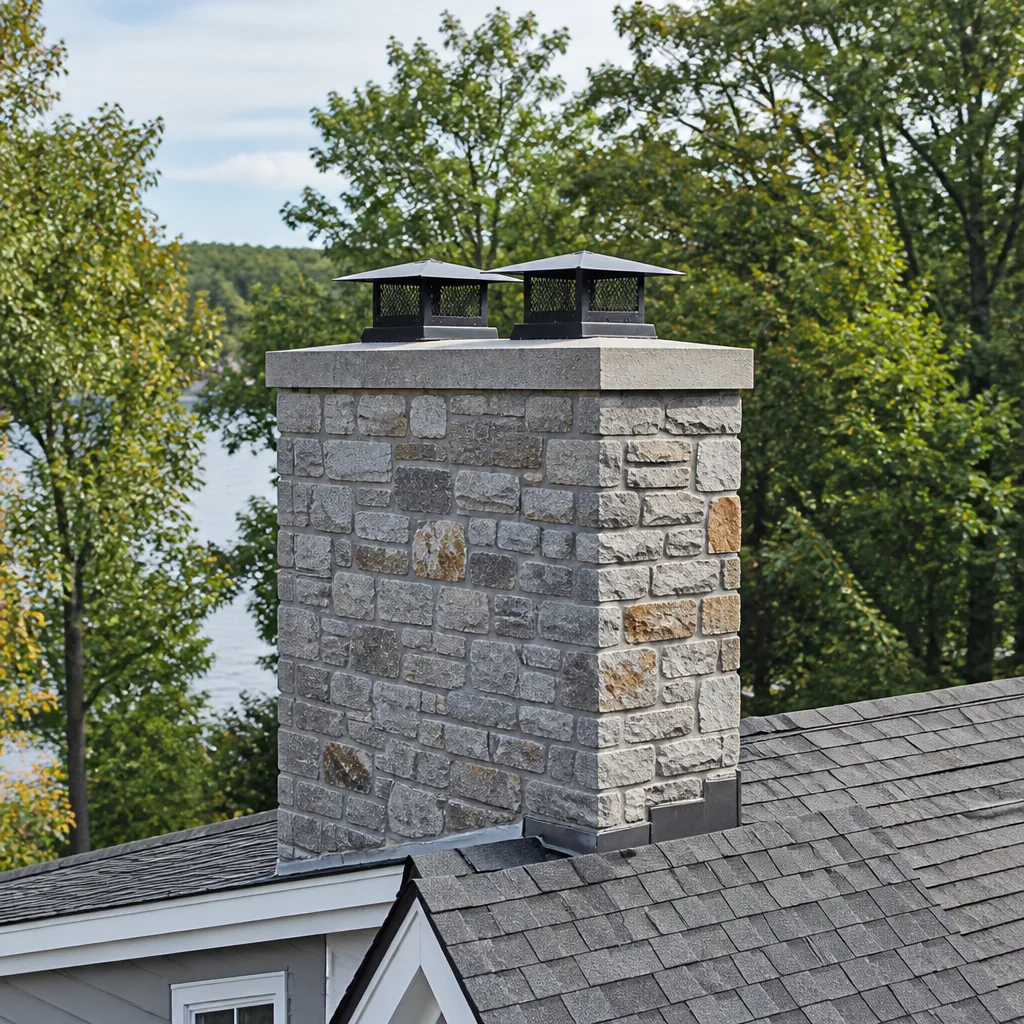
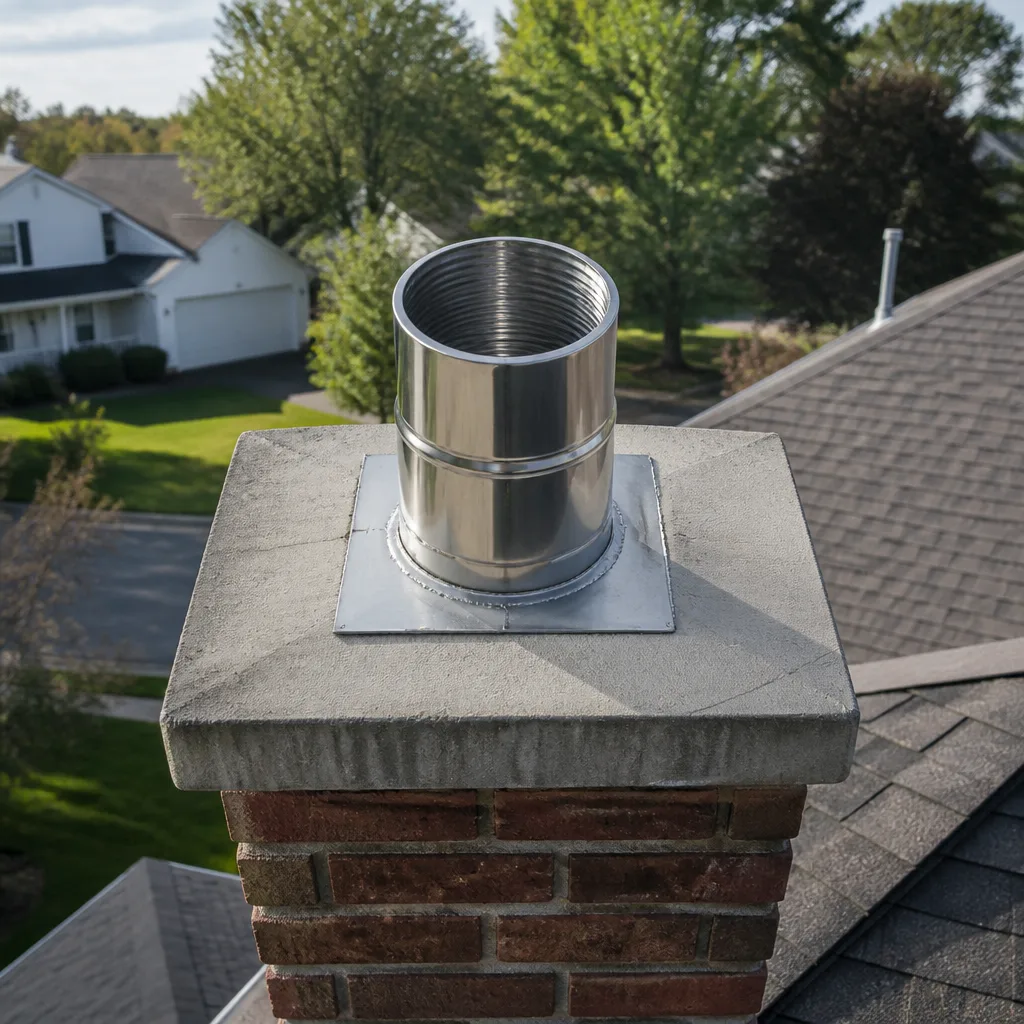
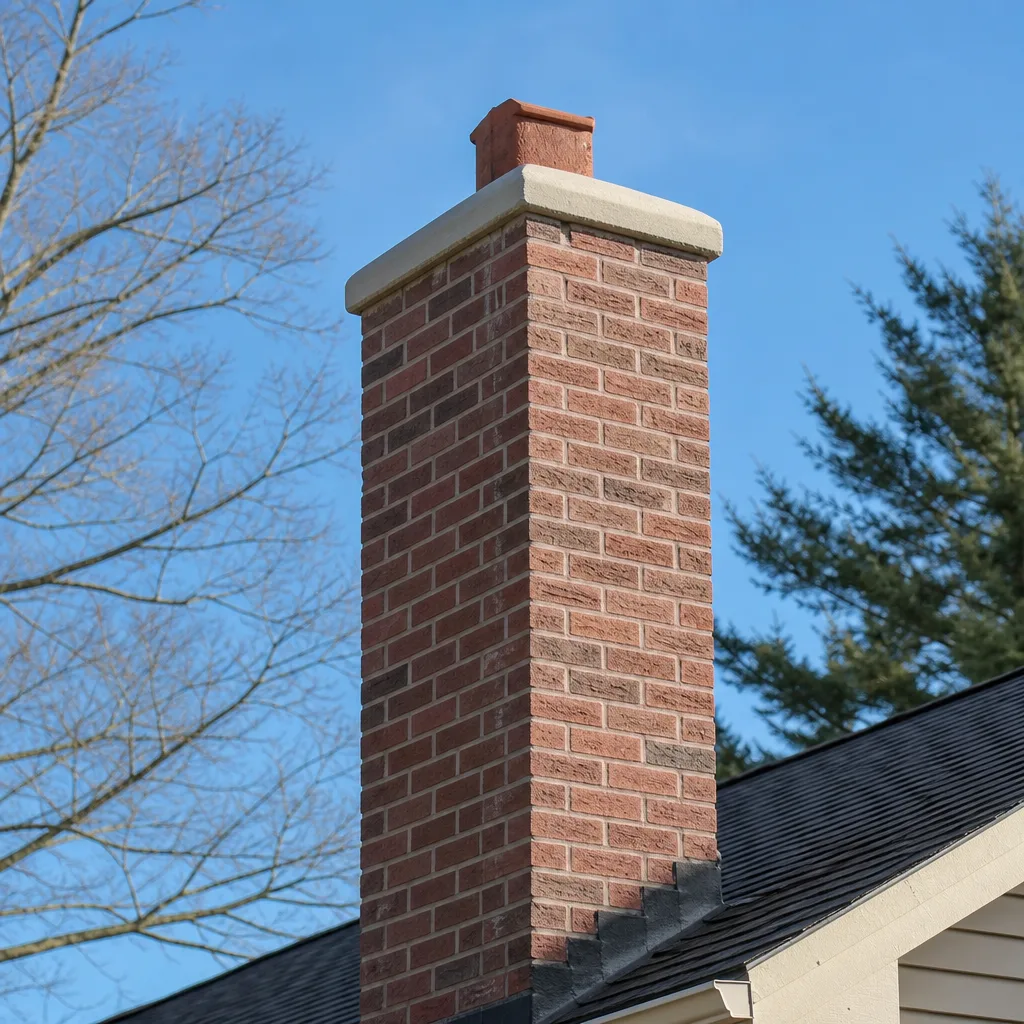
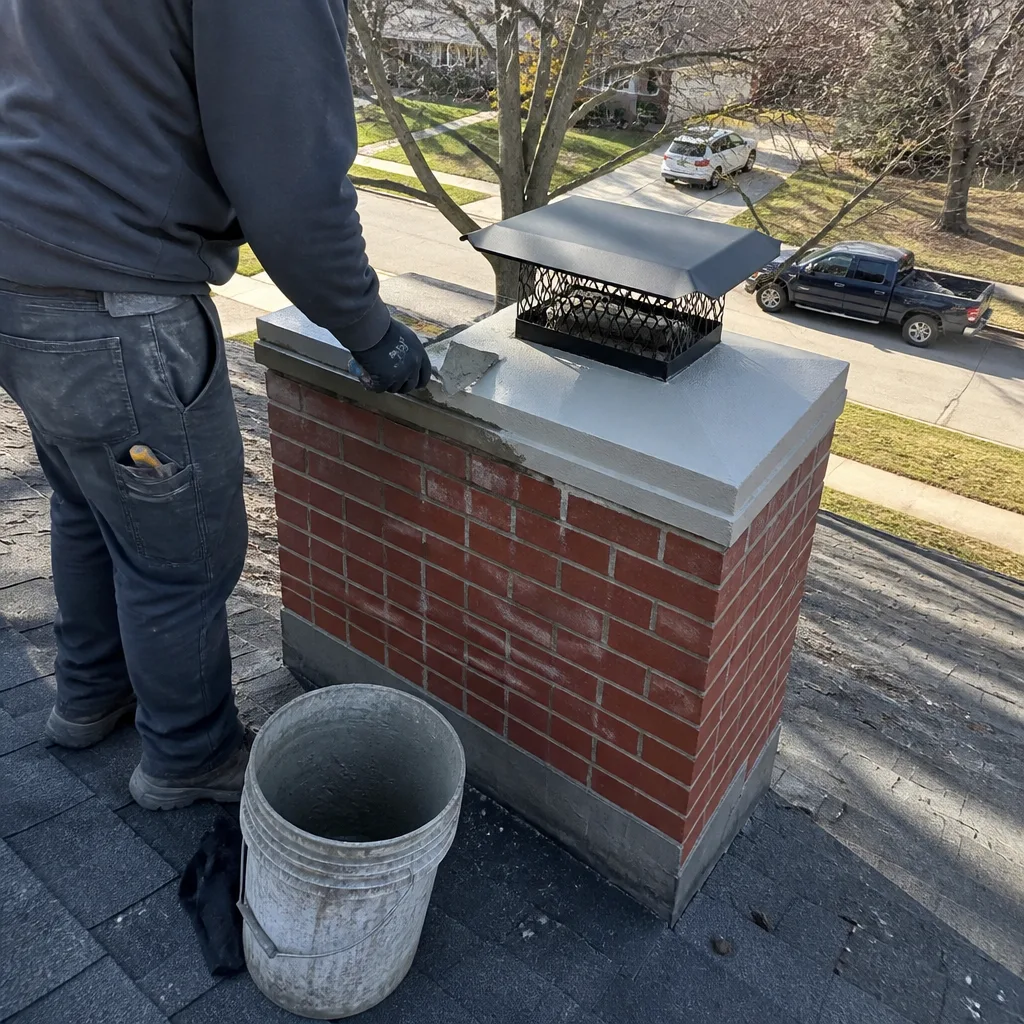
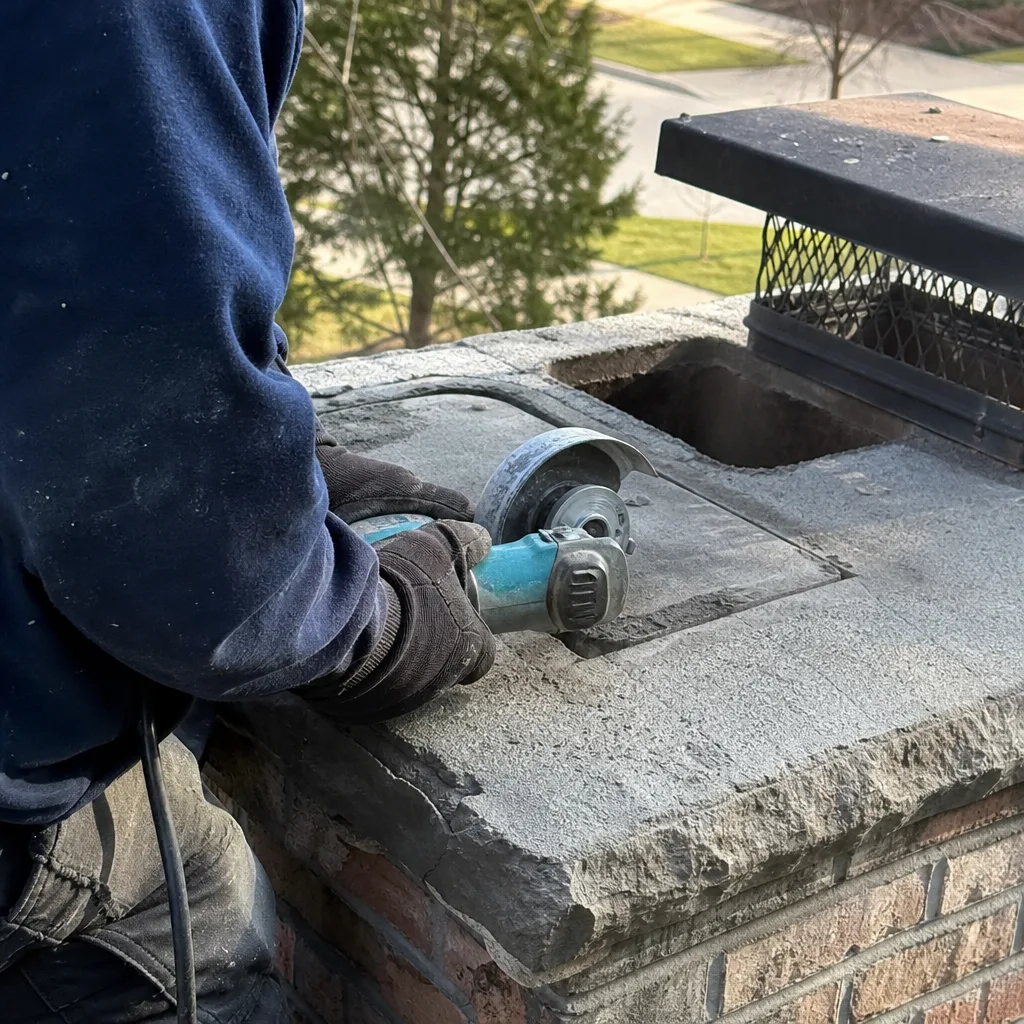
- Crown condition: Look for cracks wider than a dime, or missing chunks larger than a quarter. The crown is the concrete cap that sheds water away from the flue liner. A cracked crown in Joliet’s climate will destroy the liner within three burning seasons.
- Flashing integrity: Check where the chimney meets the roof plane. Gaps, lifted edges, or rust streaks on shingles mean water is entering the structure. In neighborhoods near the I&M Canal, where humidity runs higher, flashing corrosion accelerates.
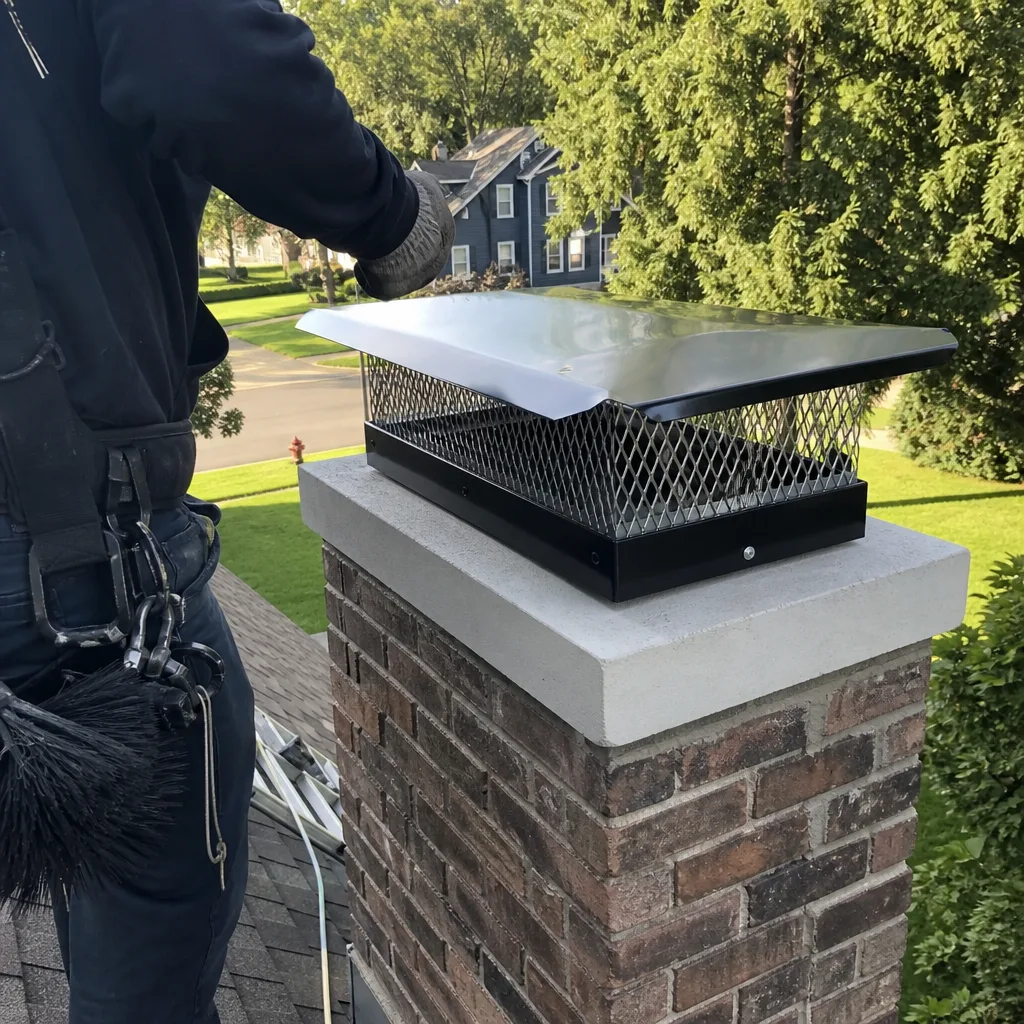
- Cap and spark arrestor: Confirm it’s present, not dented, and mesh isn’t clogged with creosote flakes or nesting material. Missing caps are the single most common cause of animal intrusion we find in Joliet’s older housing stock.
- Cricket: On chimneys wider than 30 inches, a cricket (a small roof peak behind the chimney) should divert water around it. Absence or deterioration causes the most expensive chimney leaks we document.
Fireplace and Hearth: The Living Space Evidence
This is where homeowners spend their observation time, and where subtle signals matter most.
Damper operation test: Open fully, close fully, then attempt to open to ½ position. A warped damper will jam at intermediate positions even if it cycles freely from open to closed. Warping indicates overheating - often from past chimney fires the homeowner didn’t recognize as such. In our Joliet work, we find warped dampers in roughly 15% of homes with prefabricated metal fireplaces installed 1985-2005.
Smoke chamber inspection: Shine a flashlight up past the damper. The smoke chamber (the area above the damper that funnels smoke into the flue) should show smooth, coated masonry. Rough, corbelled brick, exposed mortar joints, or blackened areas below the normal smoke line indicate deteriorated parging - the refractory mortar coating that protects the chamber. Deteriorated parging creates turbulence that deposits creosote and reduces draft.
Hearth extension check: The non-combustible surface in front of the firebox must extend 16 inches in front and 8 inches to each side for fireplaces, 18 inches for stoves. In Joliet’s 1950s ranch stock, we regularly find hearths shortened during remodeling to accommodate larger furniture. This is a code violation and an ignition hazard.
Odor assessment: Close the damper, wait 24 hours without a fire, then open it and sniff immediately. A strong, acrid, tar-like odor indicates active creosote buildup (Class II or III). A musty, damp odor suggests water intrusion. No odor, or a faint wood-ash smell, indicates normal conditions. Record your assessment: “faint ash,” “moderate tar,” or “strong musty.”
Basement or Utility Room: The Hidden Connection
For homes with basement-accessible cleanout doors - common in Joliet’s two-story colonials and Cape Cods - open the cleanout and inspect:
- Debris depth: More than 2 inches of soot and creosote flakes indicates the flue needs sweeping
- Moisture: Wet or clumped debris means water is entering from above - crown or flashing failure
- Animal evidence: Nesting material, droppings, or insect colonies require immediate attention before first fire
What to Measure, Photograph, and File
Documentation is not paranoia. It’s the difference between an insurance claim that pays and one that doesn’t. After a chimney fire on Linden Avenue in 2022, the homeowner’s dated photo series showing progressive mortar joint recession - with our written inspection reports from 2019 and 2021 - established that the condition was monitored and not neglected. The claim processed without dispute.
Your home chimney file should contain:
| Item | How to Document | Threshold for Professional Call |
|---|---|---|
| Mortar joint recession | Photo with ruler or coin for scale; note location | ¼ inch or deeper; any joint missing mortar to depth of finger nail |
| Flue liner gaps or spalling | Camera phone up the flue from fireplace or cleanout; use flash | Any visible crack, chip, or missing section; shiny areas indicating exposed clay |
| Creosote accumulation | Photo of damper blade and smoke chamber; odor log | ⅛ inch or thicker black, tarry coating; strong odor 24 hours after last fire |
| Crown cracks | Ground or ladder photo; mark crack width with tape measure visible | Crack wider than 3/16 inch; any crack that extends to flue edge |
| Flashing gaps | Roof photo showing chimney-roof intersection from multiple angles | Gap admitting daylight; lifted edge; rust streaks on shingles below |
| Hearth extension | Photo with tape measure showing front and side dimensions | Less than 16 inches front, 8 inches side (fireplace); 18 inches (stove) |
Store these in a cloud folder with naming convention: [Date]_[Location]_[Item]. Example: 2024-09-15_Fireplace_DamperWarp. Share access with your homeowner’s insurance file.
The photo record we provide under Haven Standard Clause 4 uses the same discipline - every image GPS-stamped, every finding described in plain text, every recommendation tied to a visible condition. When you maintain your own parallel file, you can verify our documentation against your observations. Discrepancies get resolved before they become disputes.
Seasonal Timing Calibrated to Joliet’s Climate
Joliet’s position at the southwestern edge of Lake Michigan’s influence creates a specific weather pattern that should drive your maintenance calendar, not generic national advice.
September: The Critical Window
Schedule your professional inspection and sweep in September, not December. Three reasons specific to this market:
- Temperature differential testing: A Level 2 camera scan requires the flue to be cool enough for safe technician access but warm enough that thermal expansion cracks are visible. Mid-September in Joliet, with daytime highs in the low 70s and overnight lows in the 50s, provides this window reliably.
- Creosote assessment accuracy: Summer humidity swells creosote deposits, making them appear thicker than they are. By mid-September, three weeks of drier air gives true readings. We’ve seen homeowners in Shorewood and Rockdale panic over “heavy buildup” in August that measured moderate by October.
- Appointment availability: December emergency calls in Joliet spike 340% above September volume. A September appointment gets you a technician with time to explain findings, not one racing to the next no-heat call.
October-March: Monthly Homeowner Observations
Run the room-by-room sequence monthly. Pay special attention after:
- First sustained freeze (typically late October in Joliet) - thermal shock reveals latent cracks
- Thaw cycles in January and February - water intrusion becomes visible as interior staining
- Final fire of season - document condition going into dormancy
April: Post-Season Assessment
After final fire, photograph the firebox condition for comparison to next September’s pre-season state. Any new cracking, spalling, or discoloration indicates a condition that worsened during use, not age-related deterioration. This distinction matters for warranty and insurance purposes.
May-August: Off-Season Repairs
Crown rebuilds, liner replacements, and masonry repairs scheduled for summer cure properly in Joliet’s moderate humidity. Mortar and refractory materials need consistent temperatures above 50°F for 72 hours minimum. Summer scheduling also means your system is ready when September arrives, not when a cold snap forces an emergency patch.
Verifying Your Sweep’s Post-Service Record
Every professional chimney service should leave you with written documentation. Under Haven Standard Clause 1, we deliver a written price, written scope, and written warranty before any work begins. Under Clause 4, we include a documented photo record on every visit. But not all services operate to this standard, and even well-intentioned sweeps can miss items.
After any professional visit, verify your written record contains these five elements:
- Pre-service condition photos: Images of the flue liner, smoke chamber, damper, and crown before any work. These establish baseline and protect against damage claims.
- Creosote classification: The record should state Class I (light, dusty), Class II (crunchy, granular), or Class III (tar-like, glazed). Class III requires chemical treatment before mechanical removal - a sweep that doesn’t note this may leave hazardous residue.
- Clearance measurements: For factory-built fireplaces, the required clearance to combustibles (typically 2 inches for metal chimneys, varies by listing) should be stated and confirmed adequate.
- Component inventory: Cap present or absent; damper type and condition; liner material, diameter, and condition; spark arrestor mesh size. Changes from previous inspection should be explained.
- Recommended action with urgency coding: Each finding should carry “monitor,” “schedule within 30 days,” or “address before next fire.” Vague “should consider” language without timing is not a professional recommendation.
If your sweep’s report lacks any of these five, you received a cleaning, not an inspection. The distinction matters for insurance, resale disclosure, and your family’s safety.
For Chimney Repair in Joliet, the same documentation standard applies. Any recommendation for crown rebuild, liner replacement, or masonry repointing should include photos of the specific damage, a written scope describing materials (we specify DuraFlex liners, HeatShield refractory products, or Famco and Copperfield components through our Haven buying network), and a fixed price valid for 30 days.
Common Mistakes to Avoid
- Using a shop vacuum on fireplace ash. Standard vacuums lack the HEPA filtration and spark arrestor required for fine ash. We’ve responded to two Joliet home fires caused by smoldering embers in household vacuum cleaners. Wait 72 hours after final fire, then use only a certified ash vacuum or call for service.
- Assuming gas fireplaces need no inspection. Gas units produce corrosive condensation and can develop blocked venting. In Joliet’s 1990s-built subdivisions near Theodore Marsh, we find deteriorated gas vent connectors in roughly 20% of “maintenance-free” units.
- Ignoring the cleanout door. Homeowners who never enter the basement miss the earliest indicator of flue deterioration. The cleanout reveals what the firebox doesn’t: debris from liner gaps, water staining from crown leaks, and animal entry below the smoke chamber.
- Scheduling December “just to be safe.” By December, Joliet sweeps are in emergency mode. You’re more likely to get a rushed cleaning without camera inspection, and any findings requiring repair push into January - mid-season, when you need the system most.
- Trusting DIY creosote removers. Logs and powders marketed as “creosote destroyers” change deposit chemistry but don’t remove buildup. They can convert Class II creosote to a more tenacious form that requires aggressive mechanical removal, damaging the liner. We document this annually in Joliet homes.
- Neglecting the exterior after interior “passes.” A clean flue with a cracked crown is a system waiting for water damage. The exterior inspection is not optional; it’s where preventable failures become visible.
When to Call a Professional
Call before small thresholds become large problems. Specifically: any mortar joint recession at or beyond ¼ inch; any crack in the flue liner visible from below; strong creosote odor when the damper is opened after 24 hours of disuse; water in the cleanout or firebox; a cap that’s missing, damaged, or improperly secured; or any smoke spillage into the room during normal operation.
Level Two Chimney Joliet offers free estimates throughout Joliet - call (815) 620-5234. Every estimate includes a written price before work starts, a documented photo record under Haven Standard Clause 4, and our 365-Day Done Right Promise. We also provide free second opinions on any competitor’s written estimate, with no obligation.
Frequently Asked Questions
A professional chimney sweep with NFPA 211 Level 2 camera inspection in Joliet typically ranges from $199 to $349, depending on system type, accessibility, and creosote severity. Factory-built fireplaces with straight flues fall at the lower end; masonry systems with multiple flues or heavy Class III creosote require additional labor and chemical pretreatment. We deliver a written price before any work starts - no exceptions, no surprises. Call (815) 620-5234 for an exact quote; estimates are free.
The National Fire Protection Association recommends annual inspection for all systems, with sweeping frequency determined by use and fuel. In Joliet’s climate, where humid summers accelerate corrosion and freeze-thaw cycles stress masonry, we advise annual sweep for wood-burning systems used more than 20 times per season, and inspection with conditional sweep for gas systems every 12-24 months. Homes in flood-prone areas near the Des Plaines River may need more frequent exterior assessment due to foundation movement.
You need a new liner when the existing one is damaged, improperly sized, or absent - and only when camera inspection confirms it. Common indicators: visible cracks or gaps in terra cotta tile; shiny, spalled clay surfaces; or a liner that doesn’t extend the full flue height. In Joliet homes built 1900-1940 with unlined brick chimneys, NFPA 211 requires liner installation for any solid-fuel appliance. We never recommend liner replacement without photo evidence you can see, and we’ll show you exactly what we found before quoting. Call (815) 620-5234 for a free camera inspection.
Skipped maintenance leads to three predictable outcomes, in order of likelihood: first, creosote accumulation reduces draft efficiency, causing smoke spillage and poor combustion; second, water intrusion through deteriorated crowns or flashing destroys interior masonry, requiring rebuild rather than repair; third, accumulated creosote ignites in a chimney fire, which can crack the liner, damage surrounding structure, or spread to the building. In Joliet, where response times from the fire department vary by neighborhood, a contained chimney fire can become a structure fire before help arrives. The cost of annual maintenance is a fraction of any of these outcomes.
A Level 1 inspection is a visual examination of readily accessible portions - what a technician can see without tools or special access. A Level 2 inspection, required by NFPA 211 for property transfers, fuel changes, or suspected damage, includes camera scan of the flue interior, attic inspection for proper clearances, and examination of the exterior from roof or ladder. Level Two Chimney Joliet performs Level 2 as standard on every visit - we made this the default in 2009, before regulators required it, and it became Haven Standard Clause 4. The camera reveals what visual inspection cannot: hidden liner cracks, creosote buildup patterns, and construction defects.
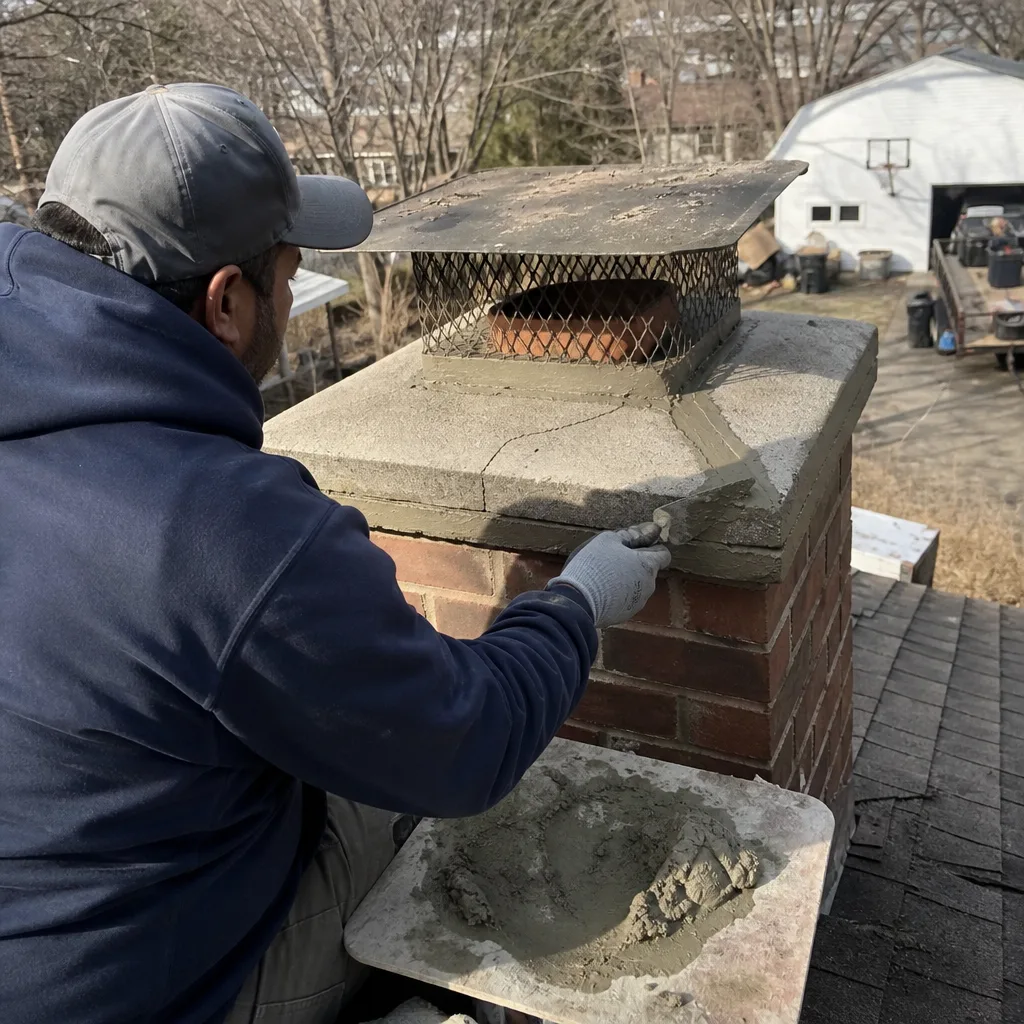
A small crown crack - under 3/16 inch, not extending to the flue edge, with no interior water evidence - can be monitored through the burning season and sealed during spring maintenance. Larger cracks, cracks that admit water to the flue, or cracks accompanied by interior staining or efflorescence require repair before next use. Water and freeze-thaw will expand any crack; Joliet’s climate makes “small” temporary by definition. We assess crown condition during every inspection and provide photo documentation with urgency coding.
The Bottom Line
Effective chimney maintenance in Joliet is not about frequency - it’s about observation quality and documentation discipline. Explore our more guides & resources for additional homeowner tools. Run the room-by-room sequence monthly. Measure what you can measure. Photograph what you can’t quantify. File everything with dates. Know your thresholds: ¼-inch mortar recession, ⅛-inch creosote buildup, 3/16-inch crown cracks. Schedule professional service in September, not December. Verify your sweep’s written record against the five required elements. And maintain your own photo file parallel to any professional documentation - it’s your evidence if questions arise.
The homeowners who avoid chimney emergencies are not luckier. They’re more systematic. This checklist gives you the system.
Written by Corrine Halstead, Owner at Level Two Chimney Joliet, serving Joliet since 2009.